




Production advantages
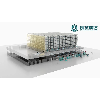
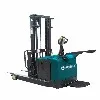
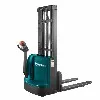
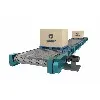
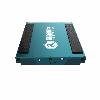
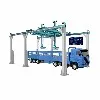
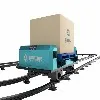
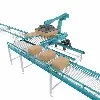
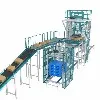
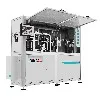
Fortucky has two 5G super factories and R&D centers, covering an area about 100,000 square meters. The 5G super factories is not only a technology center with advanced R&D strength and integration capabilities, but also is the largest manufacturing base for Fortucky, and is a beacon-like existence in the logistics industry.
Team building
We have a research and development team led by several doctors and masters, and have established extensive cooperative relations with many well-known domestic high-efficiency institutions, jointly undertaking a number of national, provincial and municipal scientific research projects. After nearly 20 years of development, the company has established an excellent research and development team integrating professional talents in mechanical design, electrical design, PLC control and software control.
R&D Strength
We attach great importance to the construction of the R&D system, establish a scientific research integration strategy, gather global scientific and technological R&D talents, and continuously increase R&D investment. The annual R&D investment is as high as 100 million CNY and we have obtained more than 300 intellectual property rights and established a complete intellectual property system.
Complete After-sales Service System
The Fortucky after-sales service system has the advantages of intelligent systems, flexible intelligent solutions and reliable operation systems. It can respond to needs quickly, including designing systems with complex requirements and making on-site adjustments when problems arise.
What Is Forklift
Forklift is a small industrial vehicle, having a power operated forked platform attached at the front that can be raised and lowered for insertion under a cargo to lift or move it. Forklifts serve the needs of various industries including warehouses and other large storage facilities.


Enhanced Load Capacities
Forklifts are designed to carry heavy weights, making them ideal for businesses that need to move large materials regularly. A forklift can easily transport objects that are too heavy for manual handling, reducing strain on your employees. With a forklift, you can move heavier loads efficiently, improving your business’s overall productivity.
Reduced Time and Effort Wastage
When it comes to moving heavy objects, time is money. The faster you can transport an item, the more productive your business will be. Forklifts help minimize the time and effort needed to move heavy loads. With a forklift in your operations, you can quickly shift large items with minimal effort, saving time and money in the long run—and keeping your employees and customers satisfied.
Improved Safety
Safety is always a top priority on industrial and construction sites. Workers face many potential hazards, and one wrong move can lead to accidents. That’s why having a reliable forklift on-site is crucial. Forklifts not only facilitate the safe and efficient movement of heavy loads but also enhance overall site safety. By using a forklift, workers can avoid manual handling risks and reduce the likelihood of being struck by falling objects. Additionally, forklifts can help clear debris from walkways and work areas, lowering trip hazards. With their numerous safety benefits, it’s no wonder that forklifts are essential equipment on any construction or industrial site.
Suitable for Long-Term Use
Unlike other machines, forklifts are designed for long-term operation. They can handle heavy loads consistently without breaking down, making them perfect for businesses that need to move large objects over extended periods. With a forklift in your operation, you can save time and money while ensuring your processes run smoothly.
Forklift Truck Types
Articulated Forklift:
Articulated forklift trucks, also referred to as swing mast forklifts, are designed for loading and unloading in narrow aisles. The fork platform on an articulated forklift can pivot right or left independently of the truck's movement. This feature allows the truck to remain aligned while the forks maneuver to access the load. They are particularly well-suited for confined spaces, compact trucks, and cold storage environments.
Counterbalance Forklift:
Counterbalance forklifts are among the most commonly used forklifts and are available in both three-wheel and four-wheel models. In these forklifts, the forks extend from the front of the truck, with stabilizing legs or arms. The term "counterbalance" refers to the counterweight located at the rear of the truck, behind the motor, which is designed to balance the heavy loads carried by the forklift.
Side Loader Forklift:
Side loader forklifts are designed to lift loads from the side and are suited for narrow aisles. While the truck itself moves in a straight line, its forks extend out to the side. This configuration allows them to operate efficiently in tight spaces where other forklifts might struggle. The forks on a side loader forklift are mounted perpendicular to the truck's body and can rotate 90 degrees while carrying a load.
Reach Forklift:
Reach forklift trucks are a type of narrow aisle forklift used in warehouses. They have two outer legs to distribute the load, with a set of wheels in the back located below the operator. Reach forklifts feature a long horizontal platform behind the mast that allows them to pick up bulky and heavy items from high places.
Turret Forklift:
A turret truck forklift is a counterbalanced narrow aisle forklift equipped with an articulating base that allows the forks to rotate 180 degrees. These forklifts are well-suited for order picking in high rack warehouses and come with navigation systems to help avoid obstacles. Turret trucks can rotate their forks completely while the truck remains stationary. Compared to typical forklifts, turret trucks feature a main mast and front mast that extend significantly higher, though their steering and safety features are similar to those of a counterbalanced forklift.
Rough Terrain Forklifts:
A rough terrain forklift is built to navigate uneven, rocky, and potholed surfaces while handling heavy loads. These forklifts are large and sturdy, equipped with tires designed to endure harsh, rugged terrain. The main types of rough terrain forklifts include telehandlers or telescopic models, rotating telehandlers, and straight mast models.
How Does A Forklift Work?
The Machine Itself
The forklift is usually powered by either an internal combustion engine or an electric motor. This power source not only propels the vehicle but also operates the hydraulic system that controls the lift. Forklifts use rear-wheel steering, which enhances manoeuvrability in tight corners. The operator controls the forklift using levers and a steering wheel.
The Lifting Mechanism
The lifting function of a forklift is controlled by its hydraulic system. When the operator pushes the lift control, it pumps hydraulic fluid into a cylinder, causing a piston inside to push upwards. This action raises the mast (the vertical assembly) and the forks, lifting the load they carry. A pulley system or chain linked to this assembly allows the forks to move vertically while remaining level, ensuring load stability.

How much does a forklift weigh?
Knowing how much a forklift weighs is very important. By knowing how much a forklift weighs, you can be sure that your forklift can be safely transported or moved to a job site. In addition, you can verify that the weight of a forklift does not exceed the weight of the structure where the forklift will be used. This will prevent cracks in the floor, or worse, a forklift that sags through the floor.
The weight of a forklift and the capacity of a forklift are not related. In order to operate a forklift safely, it is important that workers understand the difference between the two terms.
While lift truck weight refers to the actual weight of the lift truck, lift capacity describes the amount of weight a lift truck can carry. Typically, lift truck capacities range from 1,300 kg. to more than 30,000 kg.
A forklift truck is also heavier at the rear. This is because the forklift's counterweight helps to balance the weight of the load on the truck's forks. This counterweight is located at the rear of the forklift and prevents the forklift from tipping forward when lifting heavy loads.
The average weight of a forklift truck is approximately 3,000 kg. For comparison, an average car weighs about 1500 kg.

Lifting and Transporting Materials
The most common use, forklifts facilitate the movement of heavy goods within a site.
Order Picking
In warehouses, forklifts help pick and organise items for delivery, increasing efficiency.
Stacking
Forklifts enable efficient use of vertical space by stacking goods in high shelves, especially in warehouses.
Loading and Unloading
Forklifts simplify the process of loading and unloading trucks, which reduces manual labour and saves time.
Building Site Operations
Forklifts move heavy building materials like bricks, steel and concrete.
Sweeping
With special attachments, forklifts can even be used for sweeping large industrial areas.
Snow Ploughing
With a snow plough attachment, a forklift can clear snow from outdoor spaces in harsh winters.
With seven different classes of forklifts and many different types within each class, a few guiding principles will help you find the right one for your business. Here are some steps you can follow to help narrow your search and make a more informed decision:
Determine what you will be transporting. Know what you're transporting before you make your decision. Hazardous materials, vehicles and boats all require different types of forklifts.
Calculate the weight of a typical load. Forklifts are classified by the maximum weight they can transport. Once you know how much your typical load weighs, you can decide whether you need a standard or a high-capacity forklift.
Measure the space available to you
Depending on the space provided, you may want a forklift designed for narrow spaces or one featuring greater reach and flexibility.
Identify which type of fuel you will need
Check to see if the materials you're transporting are flammable or combustible. It's important to select a forklift that runs on fuel that won't ignite your load.
Examine the terrain you will be driving on
Forklifts are either designed for indoor use, outdoor use or both. Choosing a forklift based on the terrain it's best suited for as well as the strength and stability of its wheels will be valuable once you're on the job site.
What Are the Main Parts of a Forklift?
A forklift can lift heavy loads without tipping over, thanks to its design. Each part is crucial for ensuring safe operation for both the machine and the operators. These parts can vary depending on the model; for example, some forklifts are better suited for rugged terrain than others. Here are the basic parts of most forklifts:
Load Back-Rest: This part keeps the load from shifting backward.
Overhead Guard: This section of the forklift protects operators from loads if they fall.
Forks: These are the prongs that carry the loads.
Carriage: The carriage is the base of the forklift and is fixed on mast rails, allowing it to move up and down easily.
Mast: The mast raises and lowers the load and has interlocking rails that provide horizontal control.
Counterweight: This weight stabilizes the forklift and prevents it from tipping over.
Power Source: Forklifts can be powered by various sources, such as fuel cells, propane gas, gasoline, diesel engines, or batteries.
Truck Frame: The frame is the base of the machine to which all parts are attached.
Tires: Forklifts can use pneumatic tires (typically used outdoors) or solid tires (sometimes called cushion tires) that are used both indoors and on hard, flat surfaces.
Forklift Controls
The two main controls of a forklift are for steering and lifting. On the surface, these controls seem simple, but there’s a reason that you must be certified before using them. Here’s a breakdown of each control.
Steering
Like a regular car or golf cart, a forklift uses steering controls such as an accelerator, brake, steering wheel, forward, and reverse. Forklifts differ in the use of rear-wheel drive: the steering wheel controls the wheels in the forklift’s rear. This gives operators better control and precision when transporting loads.
Lifting
The lifting controls consist of two levers: one for moving the load up and down and another for tilting the load back and forth. When you push the lifting lever forward, the load moves up; when moving backward, the load moves down. The tilt functions are a bit more complex than the lifting levers.
The group has more than 300 independent core intellectual property rights and over 1,000 global service cases. Its main customers include Huawei, Mengniu Dairy, CATL (Contemporary Artificial Intelligence), Mercedes-Benz, BMW, BYD, Tesla Inc, CNPC, Sinopec, PSBC, XCMG Group,Baowu Group and Zoomlion other industry leaders. Its projects cover fast-moving consumer goods, steel, silicon-based, construction machinery, automobiles, cold chain, electronics, pharmaceuticals, new energy, chemicals, agriculture and other fields.


Certifications


FAQ
We're professional forklift manufacturers and suppliers in China, specialized in providing high quality customized service. We warmly welcome you to buy forklift in stock here from our factory. Quality products and low price are available.
forklift lock, forklift cable, forklift manager