




Production advantages
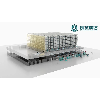
Fortucky has two 5G super factories and R&D centers, covering an area about 100,000 square meters. The 5G super factories is not only a technology center with advanced R&D strength and integration capabilities, but also is the largest manufacturing base for Fortucky, and is a beacon-like existence in the logistics industry.
Team building
We have a research and development team led by several doctors and masters, and have established extensive cooperative relations with many well-known domestic high-efficiency institutions, jointly undertaking a number of national, provincial and municipal scientific research projects. After nearly 20 years of development, the company has established an excellent research and development team integrating professional talents in mechanical design, electrical design, PLC control and software control.
R&D Strength
We attach great importance to the construction of the R&D system, establish a scientific research integration strategy, gather global scientific and technological R&D talents, and continuously increase R&D investment. The annual R&D investment is as high as 100 million CNY and we have obtained more than 300 intellectual property rights and established a complete intellectual property system.
Complete After-sales Service System
The Fortucky after-sales service system has the advantages of intelligent systems, flexible intelligent solutions and reliable operation systems. It can respond to needs quickly, including designing systems with complex requirements and making on-site adjustments when problems arise.
What Is Stacker
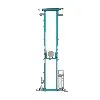
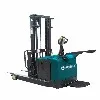
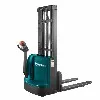
Stacker trucks are made for transporting pallets from A to B, as well as lifting and storing goods in vertical positions. Stackers are typically equipped with two forks for lifting pallets. The custom stackers designed by PTB can also feature a thorn for lifting coils, multiple forks, a platform and more.


Benefits of Stacker
Increased Productivity: These machines can run continuously 24/7/365. Storage and retrieval are performed in the same movement (combined cycles), making the system highly agile.
Total Automation: Their autonomous operation streamlines warehouse management and eliminates errors linked to manual tasks.
Maximum Space Utilization: Stacker cranes can reach heights of up to 45 m in aisles as narrow as 1.5 m wide.
Double- and Multi-Depth: These machines can operate with high-density racking in deep channels, such as pallet flow racking or the Pallet Shuttle system, as well as with single- or double-deep racking.
High Flexibility: A wide range of stacker cranes allows users to tailor the system to their load capacity, height, and cycle time requirements.
Safety: Stacker cranes handle pallets with extreme precision and significantly reduce handling equipment traffic, enhancing warehouse safety.
Comprehensive Solution: The company designs, manufactures, installs, and commissions all AS/RS components, including the racking, stacker cranes, conveyors, and warehouse control and management systems.
Types Of Stackers
Stackers come in different configurations to suit various material handling needs. Here are a few common types of stackers:
Walkie stackers
Walkie stackers are operated by walking behind or alongside the machine. They’re compact and manoeuvrable, making them suitable for narrow aisles and tight spaces. Walkie stackers are typically electric-powered.
Rider stackers
Rider stackers feature an operator platform or a seated compartment. They’re designed for larger loads and higher lifting capacities. Rider stackers are commonly used in larger warehouses and manufacturing facilities.
Straddle stackers
Straddle stackers are designed to handle loads with an oversized or non-standardized base. The legs of the stacker can straddle the load, providing stability and enabling easy lifting and stacking of unconventional pallets or containers.
The Basic Working Principles of Stackers
Lifting Mechanism:
At the heart of a stacker lies its lifting mechanism, typically powered by hydraulic systems or electric motors. These mechanisms enable the stacker to raise and lower loads with precision and control. Hydraulic stackers utilize hydraulic cylinders to lift the forks or platform, while electric stackers rely on motor-driven screw mechanisms or chain lifts.
Forks or Platform:
Stackers come in various configurations, but most feature either forks or a platform for handling goods. Fork stackers resemble smaller versions of forklifts, equipped with two forks that slide under pallets or loads for lifting. On the other hand, platform stackers employ a flat platform that elevates goods directly.
Steering and Mobility:
Mobility is another crucial aspect of stackers, enabling them to navigate tight spaces and maneuver around obstacles. Many stackers incorporate features like swivel wheels, compact designs, and ergonomic controls for effortless steering. Electric stackers often offer greater maneuverability and precision control compared to their hydraulic counterparts.
Load Capacity and Stability:
Stackers are designed to handle a wide range of loads, from lightweight boxes to heavy pallets. Manufacturers specify load capacities to ensure safe and efficient operation. Additionally, stackers prioritize stability to prevent tipping or accidents during lifting and stacking operations. Features like wide wheelbases, low centers of gravity, and stability-enhancing technologies contribute to their safe performance.
Control Systems:
Modern stackers often feature advanced control systems for enhanced functionality and safety. These systems may include onboard computers, sensors, and safety interlocks to monitor load conditions, prevent overloading, and detect obstacles. Some stackers also offer programmable settings and customizable operation modes to suit specific tasks and environments.
Safety Features:
Safety is paramount in stacker design and operation. In addition to stability-enhancing features, stackers incorporate various safety mechanisms to protect operators and goods. These may include emergency stop buttons, audible alarms, automatic braking systems, and protective guards. Additionally, operators are typically trained in safe handling practices and provided with personal protective equipment (PPE) for added safety.
Energy Efficiency:
With a growing emphasis on sustainability and energy efficiency, many stackers are designed with eco-friendly features. Electric stackers, in particular, offer quiet operation, zero emissions, and energy-saving modes. Some models may incorporate regenerative braking systems to recover and reuse energy during deceleration, further reducing their environmental impact.

Components of Stackers
Support Structure
The support structure of a stacker is usually composed of steel components, including columns, beams, and bases. The stability and strength of these structures are essential to ensure the proper operation of the stacker.
Transportation System
The transportation system of a stacker is used to move goods and is generally composed of conveyor belts or chain conveyors. These devices can transport goods from the entrance to the working area of the stacker or from the working area to the exit.
Lifting Mechanism
The lifting mechanism is used to lift or lower goods in a vertical direction. It is usually driven by an electric hydraulic system or an electric screw system. The design of the lifting mechanism allows for cargo handling within different height ranges according to specific needs.
Fork Arm System
The fork arm system is a key component of the stacker, used to grab and carry goods. It typically consists of a fork arm, a grabber, and a control system. The fork arm can move horizontally and extend or retract as needed to accommodate goods of different sizes and weights.
Control System
The control system of the stacker is used to monitor and control the operation of the entire equipment. It usually includes sensors, actuators, programming controllers, and human-machine interfaces. The control system enables the automatic operation of the stacker and ensures its safe and reliable performance.
9 Key Factors for Finding the Right Stacker
Mode of Operation:
Stackers are divided into three categories based on their mode of operation: manual stackers, semi-powered stackers, and fully powered stackers. The mode of operation is directly related to how intensively the stacker can work. A manual stacker may tire the operator and slow down the work process during intensive use. Therefore, when choosing a stacker, it’s essential to consider the mode of operation first. For light loads, short distances, and infrequent use, a manual or semi-powered stacker is advisable, while for heavy loads or long distances, a fully powered stacker is preferred. The model of battery stacker should be chosen according to the required working time.
Load Capacity:
The load capacity of the stacker is a critical factor affecting your operations. Determine the load capacity you need. Keep in mind that the load capacity decreases as the lifting height increases, which is a fundamental principle of stackers. Understanding how much load you need to place on high shelves will help you choose the right model.
Lifting Height:
Lifting height is one of the most important features of stackers. You need to know how high the load can be lifted. Additionally, evaluate how high the stacker can lift based on your storage area's height. This detail will help you make the best use of your storage space. If you need to stack in a location with a low ceiling, you should choose a stacker with a free lift feature.
Area of Use:
Stackers operate on flat surfaces such as epoxy floors, polished concrete, and asphalt. They cannot be used on dirt floors or ramps. Another important consideration for the area of use is whether you will be working in narrow corridors or large warehouse areas. These features will help you choose the right stacker or forklift. Ensure there are no rail shafts or pit-like obstacles at door thresholds, as these can damage your wheels and gearbox.
How to Use:
Decide how you will use the stacker. Although stackers are generally preferred for lifting loads to high places, some businesses use them primarily for transportation. It’s important to clearly determine your intended use, but keep in mind that they can serve both purposes. The key factor here is the percentage of use. Battery-powered stackers are more expensive than battery-powered pallet trucks, so if you have more transportation needs and less shelf placement work, you might increase efficiency by using an additional battery-powered pallet truck.
Pallet Type:
While standard Euro pallets are often used, it’s essential to determine which type of pallets you will use—standard pallets or specially designed ones. The stacker must be suitable for the chosen pallet type, as stackers are categorized based on pallet compatibility. Some stackers also feature adjustable fork widths.
Working Time:
Working time determines how long the stacker can operate on a single charge. Electric stackers typically have longer working times and offer time efficiency advantages. Manual stackers rely solely on the operator's physical strength, which can extend working time but also tire the operator, especially with heavy loads. You need to calculate how many shifts there are and how many hours you will work per shift. Companies that operate multiple shifts may need to use stackers with dual batteries. If operating a single shift, the model should be selected based on working time.
Maneuverability:
Maneuverability refers to the stacker's ability to navigate tight spaces and place loads precisely. Narrow aisle stackers can often maneuver effectively in limited warehouse spaces, allowing for greater flexibility in warehouse organization. Maneuverability can significantly impact operational efficiency by increasing mobility within the warehouse. If you need to lift heavy loads to high shelves, choose models with a large floor projection for occupational safety.
Service and Spare Parts:
After finding a stacker with the desired technical features, the last consideration should be the availability of service and spare parts. Even if the product features and price are suitable, ensure that the service and spare parts support are fast and professional.
How Does a Stacker Help with Material Handling?
Material handling is one of the most important functions in any warehouse.
A stacker can help improve warehouse efficiency by reducing the amount of time spent on transporting goods from one area to another.
In addition, the stacker allows for easier and more efficient storage of material, as it can be placed into bins or racks and lifted up or down with ease. This decreases the amount of time spent on manually filing items away or finding them in storage.
The group has more than 300 independent core intellectual property rights and over 1,000 global service cases. Its main customers include Huawei, Mengniu Dairy, CATL (Contemporary Artificial Intelligence), Mercedes-Benz, BMW, BYD, Tesla Inc, CNPC, Sinopec, PSBC, XCMG Group,Baowu Group and Zoomlion other industry leaders. Its projects cover fast-moving consumer goods, steel, silicon-based, construction machinery, automobiles, cold chain, electronics, pharmaceuticals, new energy, chemicals, agriculture and other fields.


Certifications


FAQ
We're professional stacker manufacturers and suppliers in China, specialized in providing high quality customized service. We warmly welcome you to buy stacker in stock here from our factory. Quality products and low price are available.
stacker with efficient operation, stacker wheels, stacker forks