





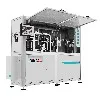

Production advantages
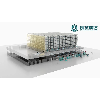
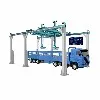
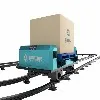
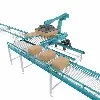
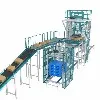
Fortucky has two 5G super factories and R&D centers, covering an area about 100,000 square meters. The 5G super factories is not only a technology center with advanced R&D strength and integration capabilities, but also is the largest manufacturing base for Fortucky, and is a beacon-like existence in the logistics industry.
Team building
We have a research and development team led by several doctors and masters, and have established extensive cooperative relations with many well-known domestic high-efficiency institutions, jointly undertaking a number of national, provincial and municipal scientific research projects. After nearly 20 years of development, the company has established an excellent research and development team integrating professional talents in mechanical design, electrical design, PLC control and software control.
R&D Strength
We attach great importance to the construction of the R&D system, establish a scientific research integration strategy, gather global scientific and technological R&D talents, and continuously increase R&D investment. The annual R&D investment is as high as 100 million CNY and we have obtained more than 300 intellectual property rights and established a complete intellectual property system.
Complete After-sales Service System
The Fortucky after-sales service system has the advantages of intelligent systems, flexible intelligent solutions and reliable operation systems. It can respond to needs quickly, including designing systems with complex requirements and making on-site adjustments when problems arise.
What Is Elevator
An elevator, a. k. a. a lift, is a machine that transports people or freight between levels, decks, or floors of a building. Elevators are usually cable-assisted, hydraulic cylinder-assisted, or roller-track-assisted.


Benefits of Elevators
Increased Productivity
Elevators utilize traction or rack-and-pinion technology, allowing for the quick and efficient transportation of heavy loads. When personnel and materials reach their destination faster, it reduces the time others spend waiting to climb stairs or scaffolding. Elevators can significantly increase productivity at industrial facilities for maintenance and operational tasks.
Enhanced Safety
Using an elevator instead of climbing stairs reduces the risk of falls and injuries. Alimak’s elevators also come with a range of additional safety features, including a unique safety device that activates if the elevator car exceeds the rated speed, door interlockings, and an overload sensing system to enhance passenger safety.
Space Saving
Elevators allow you to optimize the available area and save space with various installation options. Rack-and-pinion elevator drive technology does not require a separate machine room or elevator shaft and can be installed against any structure, whether vertically, inclined, or along curved surfaces.
Cost Efficiency
The manual handling of goods over long distances can delay productivity while increasing labor costs. A new industrial elevator can help reduce these expenses and increase profitability. This mode of transportation is also safer for goods and equipment, which helps reduce damage and extend product lifespan.
Convenience
The speed and safety benefits of an industrial elevator make it a convenient system for transporting goods, allowing personnel to move materials between different levels of the facility.
Elimination of Risks and Injuries
Even experienced laborers may struggle to transport goods between areas and facilities manually, leading to avoidable injuries. Personnel are also vulnerable to slips, falls, and general physical exertion when using stairs; an industrial elevator can help circumvent these hazards.
Different Types of Elevator
Hydraulic Elevator
A hydraulic elevator is power-driven by a piston that moves within a cylinder. The piston movement can be done by pumping hydraulic oil to the cylinder. The piston lifts the lift cab easily, and the oil can be controlled by an electrical valve.
Pneumatic Elevator
The pneumatic elevator can be designed with an external cylinder, and the cylinder is a crystal clear self-supporting cylinder. This cylinder includes modular sections to fit effortlessly into one by one. The top of this tube is designed with steel material that ensures tight air shutting by suction valves as well as inlets. A lift car runs within the cylinder, & the head unit on the top cylinder surface consists of valves, controllers, and turbines for controlling the elevator movements.
Cable Driven or Traction Elevator
The traction elevator or cable driven elevators are the most popular elevators. It consists of steel cables as well as hoisting ropes that run above a pulley which is connected to the motor. This is geared otherwise gearless-traction type elevator. In this kind of elevator, several wire and hoisting cables are connected to the surface of an elevator car with covering around it on sheaves at one end & the other side is connected to a counterweight that travels up & down on its guide rails.
Capsule Lift
Capsule lift or Elevators are used in prestigious buildings, which can be called as decoration of a building because they improve the building’s beauty as well as carries life into it.
Building Lift
A building lift is a vertical transportation among the floors of the building. These are frequently used in public buildings, complexes, offices, and multistory building. These lifts are important in providing vertical movement, mostly in high buildings, for a wheelchair as well as other non-ambulant building customers. Some type of lifts also is applicable for emigration & firefighting purposes.
Passenger Lift
This type of lift has entirely included a lift car that moves vertically in a specially equipped lift shaft. Passengers are traveled between the floors in the building at quick speed. The control systems in the lift frequently designed to offer the most economical sharing of passengers all over the building. These lifts are very space efficient which are used in existing buildings where space is at a best.
Freight Elevator
In the world of elevators, these lifts are workhorses. These are very useful for transporting materials, goods in warehouses, manufacturing industries, shopping malls, seaports, etc. This type of elevator is separated into classes, to describe their load capacity as well as application. These lifts are strong in nature, and they are specially manufactured by engineers.
Residential Elevators
Residential elevators provide stylish options to the platform as well as stair lifts. These lifts can be effortlessly incorporated in any available home, otherwise incorporated in edifice plans for latest homes. These types of elevators are available in different styles, and these can be installed in your home walls, otherwise included effortlessly to improve your home’s decoration. The main benefits of residential elevators are; they can move you securely among floors even during a power failure. Quick installation and offers you an effortless life.
What Is The Difference Between an Elevator and a Lift Structure?
Another crucial distinction you should note between a lift and an elevator is their structural designs. Elevators must have a shaft and a fully enclosed cab. A walled shaft houses the cab and associated machinery.
On the other hand, Lifts usually feature an open cab except for 42″ panels on the platform sides. As a result, the structural designs of lifts and elevators differ significantly.
Motor
The motor, the heart of the elevator, makes the lift move, which is the carrier where people ride. This motor, typically electric, receives signals from the control system based on the chosen floor. Depending on the direction of movement (up or down), the motor rotates, transferring energy to the next crucial component.
The Pulley System
The elevator system, comprised of a sheave (a wheel with a groove) and cables, changes the circular motion of the motor into the lift. The sheave is at the top of the elevator lift shaft and connected to the engine with a drive shaft. The sheave also rotates while the motor turns, thus helping unwind the cables. These robust cables, made of steel for strength and flexibility, are connected to the lift at one end and the counterweight at the other.


The Counterweight
The regulator that can easily be overseen is a significant part of the elevator’s operation. It is considered a heavyweight that moves in reverse the lift through the shaft. Its weight is carefully calculated to balance the lift’s and passengers’ weight. This ingenious design reduces the motor’s energy to move the lift, as the counterweight helps offset some of the lifted weight.
Safety Brakes
Ensuring passenger safety is paramount, and elevators incorporate robust safety features. One crucial element is the safety brake. This braking system automatically engages if the lift experiences a sudden stop or a loss of power. The brakes typically clamp down on rails within the shaft, preventing the lift from falling and ensuring passenger safety.
Elevator Working Principle
There are two main types of elevators with different working principles: traction elevators and hydraulic elevators.
Elevator Working Principle – Traction Elevators:
Most common in high-rise buildings.
Use an electric motor to turn a sheave (pulley).
Steel ropes are wound around the sheave and connect to the elevator car and a counterweight.
When the motor turns in one direction, the ropes lift the car while the counterweight descends.
The counterweight balances the weight of the car, reducing the energy needed from the motor.
Sensors and control systems ensure smooth, safe operation and accurate stopping at floors.
Elevator Working Principle – Hydraulic Elevators:
More common in low-rise buildings.
Use a piston and a cylinder filled with hydraulic fluid.
A pump pushes the fluid into the cylinder, extending the piston and lifting the car.
Releasing the fluid lowers the car.
This design is simple but has limited travel height due to cylinder size and pressure limitations.
Additional Details:
Safety Features: Both types have multiple safety features, such as brakes, governors, and door interlocks.
Modern Advancements: Traction elevators can use regenerative braking to return energy to the grid, and some utilize magnetic levitation for smoother, quieter operation.
Specifics for Your Needs: To understand the best type for your situation, consider building height, weight capacity, desired speed, and budget.
Elevator systems find applications in a wide range of industries and buildings. Let’s explore some of the common areas where elevators are essential:
Commercial Buildings
Elevators are crucial components of commercial buildings, ensuring smooth and efficient vertical transportation for employees, customers, and visitors. High-rise office buildings, shopping malls, and hotels heavily rely on elevators to facilitate movement within the premises.
Residential Complexes
In residential complexes and apartment buildings, elevators provide convenience and accessibility for residents. They enable easy transportation of groceries, luggage, and other heavy items, eliminating the need to climb multiple flights of stairs.
Healthcare Facilities
Hospitals and healthcare facilities utilize elevators to transport patients, medical equipment, and supplies. Elevators designed for healthcare settings often have specialized features to ensure the comfort and safety of patients during transit.
Transportation Hubs
Airports, train stations, and bus terminals require efficient vertical transportation systems to handle the influx of passengers and their luggage. Elevators play a vital role in ensuring smooth transitions between different levels of these transportation hubs.
Industrial Settings
Within industrial environments, elevators are crucial for transporting heavy machinery, raw materials, and finished products between different floors. Industrial elevators are built to withstand demanding conditions and accommodate large loads.
Five things to consider when choosing an elevator
Elevators are useful in a variety of buildings, including homes, apartment buildings, and offices. However, there are so many different types and styles of lifts that it can be difficult to determine which one to use. Here are a few things you need to consider when choosing an elevator for your building.
Size
How big should your elevator be? Most elevators are 3 x 4 feet, but they also come in larger sizes if you need them. This is something you will need to discuss with your elevator company as they will be able to calculate everything for you based on the type of load you expect.
01
Load capacity
Smaller buildings and spaces with low traffic can easily get away with a 1,000 lb. load capacity, but if you are using an elevator for cargo or heavy traffic, you may need more. Lifts have load limits, but you can get a lift designed specifically for your load expectations.
02
Safety
Any time you transport people, you need to consider safety measures. There are many systems that should be installed to ensure the safety of you and anyone riding the elevator. These include alarm systems, power failure backup systems, braking systems, and telephones installed in the elevator car.
03
Price
There are a wide variety of lifts, starting with smaller, more basic, lower-cost options, to luxury lifts that are fun to ride. However, in addition to the initial price of the elevator, you will need to consider the cost of installation. You may also need to do some renovations to the building to make room for the elevator. Houses, in particular, are rarely designed to add elevators in the future, so they may require additional construction to accommodate them.
04
Drive system
The drive system is also an important choice. Your elevator installer can explain everything in more detail, but you'll also need to do some research on your own. The most common drive systems for small elevators include reel and counterweight chain drives. Some of these, such as reel systems, will require a machine room to house the drive.
05
Maintain a Record of Functional Issues
Achieve a safe and properly maintained elevator by monitoring problematic patterns. Keep a record of the occurrence of operational problems and service repairs. This practice helps predict future issues, allowing you to take necessary steps and preventative measures. It also aids in proper analysis of the problems and is a time-efficient process that helps you find solutions more quickly.
Check on the Elevator Daily
These examinations and assessments should be thorough and straightforward. Checks must include the proper functioning of the elevator buttons, internal maintenance, and the smooth movement of the elevator. Any complicated repairs should be left to professionals, as independent checking can be dangerous for both you and the elevator. Keep a tracker for these examinations to ensure safety.
Avoid Keeping Any Malfunctioning Devices Nearby
Any malfunctioning equipment, such as burnt-out light bulbs, broken fans, or faulty buttons, should not be ignored. Ensure that they are repaired or replaced immediately to prevent accidents. If you notice any malfunctioning equipment, contact your elevator service contractor right away.
Prevent the Use of Industrial Cleaners
Industrial cleaners contain potent substances that can cause significant damage to the elevator's exterior. Not only do they damage the metal, but they can also lead to internal issues that affect the elevator's efficiency. Inquire with your elevator contractor about the appropriate type of cleaner to use.
Do Not Overlook Weight Guidelines
Every elevator has a weight limit. Neither materials nor people should exceed this limit. During heavy transportation, ensure that management is aware of these restrictions and takes appropriate steps. Exceeding the limit can compromise the elevator’s mechanisms and operations, increasing the risk of damage and endangering passengers. A good rule is not to exceed one-quarter of the weight limit, especially in business settings.
Call Your Elevator Repair Company Before Taking Any Action
Any activity involving the elevator should begin with a call to the elevator service company. It’s important to avoid independent actions for the safety of all involved. Issues are best left to professionals who are trained to handle such situations. This preventative step not only protects lives but also helps avoid future repair costs.
Get Elevator Maintenance Done by Professionals
Always keep your elevator service company's contact information readily available. This is essential for complete maintenance. Any issue, whether minor or significant, should be addressed by professionals. Maintain a schedule for regular service and pay attention to small issues like unusual noises, lagging, or problems with opening and closing. Contact the service team as soon as you notice anything unusual.
The group has more than 300 independent core intellectual property rights and over 1,000 global service cases. Its main customers include Huawei, Mengniu Dairy, CATL (Contemporary Artificial Intelligence), Mercedes-Benz, BMW, BYD, Tesla Inc, CNPC, Sinopec, PSBC, XCMG Group,Baowu Group and Zoomlion other industry leaders. Its projects cover fast-moving consumer goods, steel, silicon-based, construction machinery, automobiles, cold chain, electronics, pharmaceuticals, new energy, chemicals, agriculture and other fields.


Certifications


FAQ
We're professional elevator manufacturers and suppliers in China, specialized in providing high quality customized service. We warmly welcome you to buy elevator in stock here from our factory. Quality products and low price are available.
elevator, Screw Elevator, Reciprocating Elevator