








Production advantages
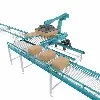
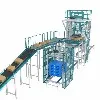
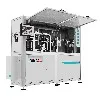
Fortucky has two 5G super factories and R&D centers, covering an area about 100,000 square meters. The 5G super factories is not only a technology center with advanced R&D strength and integration capabilities, but also is the largest manufacturing base for Fortucky, and is a beacon-like existence in the logistics industry.
Team building
We have a research and development team led by several doctors and masters, and have established extensive cooperative relations with many well-known domestic high-efficiency institutions, jointly undertaking a number of national, provincial and municipal scientific research projects. After nearly 20 years of development, the company has established an excellent research and development team integrating professional talents in mechanical design, electrical design, PLC control and software control.
R&D Strength
We attach great importance to the construction of the R&D system, establish a scientific research integration strategy, gather global scientific and technological R&D talents, and continuously increase R&D investment. The annual R&D investment is as high as 100 million CNY and we have obtained more than 300 intellectual property rights and established a complete intellectual property system.
Complete After-sales Service System
The Fortucky after-sales service system has the advantages of intelligent systems, flexible intelligent solutions and reliable operation systems. It can respond to needs quickly, including designing systems with complex requirements and making on-site adjustments when problems arise.
What Is Pallet
A pallet (also known as a cargo platform) is a flat structure used to secure goods during transportation by trucks, forklifts, or other transportation equipment. They serve as load units to facilitate efficient movement and stacking of goods in warehouses. Pallets are commonly made from wood, plastic, metal, or recycled materials.


Five advantages of shipping by pallet
Pallet shipments are a popular and economical choice when shipping freight. Here are five reasons why:
Protection
Pallet shipments offer a sturdy base for stacking goods—preventing goods from shifting during transit.
01
Movability
With the use of a forklift or pallet jack, pallet shipments are easy to move—saving on labor costs.
02
Sustainable
Because they can be reused multiple times, pallets save resources—and shipping costs.
03
Standardized
Standard sizes and dimensions make it easier for carriers to handle and transport pallet shipments.
04
Economical
Since pallets are relatively inexpensive to purchase or rent, they are a cost-effective way to ship freight.
05
Types of Pallet
Roto Molded Pallets
Roto-molded pallets are made using a rotational molding method. They are economical, available in standard sizes, and can be enhanced using steel frames to increase its load-bearing capacity. Roto-molded pallets are used in industries where hygiene is a priority.
Injection Molded Pallets
Injection-molded pallets are flat pallets available in standard sizes and colour. They are used to lift goods during transportation and can be easily moved using forklifts, loaders, or jacks. Injection-molded pallets made with HDPE are washable, corrosion-free, recyclable, and durable.
Block/Deck Board Pallets
Block pallets can be lifted from all four directions. The upper deck is supported by twelve columns. There may or may not be a bottom deck. Block pallets provide high handling efficiency and could be made of wood, plastic, or metal.
Stringer Pallets
Stringer pallets offer extra support over block pallets. Two boards running between the top and bottom deck on two opposite ends of the pallet provides additional reinforcement. But this means stringer pallets can be lifted only from two sides that are open. Four-way stringer pallets are also available where the stringer has a notch cut allowing forklifts to pick up the pallet.
How to stack standard pallets?
The Sturdy Squares: Rigid Rectangular Goods
Rectangular goods like wooden, paper, and metal containers are pretty straightforward. Think of building a wall, brick by brick, in a single-layer or with staggered layers. Once your masterpiece is complete, wrap it up snug with stretch or shrink film packaging. It’s like sending your goods off with a warm, protective hug.
The Paper Trail: Paper or Fibrous Goods
Stacking paper or fibrous goods is a bit like making a sandwich. Start with a solid layer of cargo, add your goods, and repeat until you’ve built a delicious multi-layer stack. Don’t forget the straps – they’re the toothpicks holding your sandwich together.
Roll With It: Cylindrical Cargo
For cylindrical cargo, such as sealed metal containers, imagine you’re stacking logs for a campfire. You can make a single layer or stack them up, log cabin-style. Don’t forget the wooden cargo cover. It’s like a roof for your little log cabin.
Keep It Dry: Moisture-Sensitive Goods
For items that fear the damp, like paper products and textiles, you need a bit of strategy. Stack them like you would rigid rectangular goods, but add corner supports, cover partitions, and other reinforcements. It’s like building a fortress against moisture and water.
Handle With Care: Fragile Goods
Fragile goods need a bit of TLC. Stack them one way or in multiple layers, and add a wooden supporting partition structure. Think of it as a safety harness for your breakables.
Stand Tall: Metal Bottle Cylindrical Containers
For these, you’ll want to stand them upright in a proud, single-layer vertical stack. It’s like a choir, all standing in a row. Add a cargo frame and slat reinforcement structure for extra stability – consider it the choir’s backstage crew.
How to Ship a Pallet: Step-By-Step Guide
The question of how to ship a pallet is most importantly answered by how you properly secure it for transit. A lot of damage can occur during shipment due to improper bundling or securing of the freight. Below are the steps to successfully ship a pallet:
Choose a sturdy, undamaged box with the appropriate Edge Crush Test (ECT) rating for your stacking needs. If the product is heavy, a double-sided corrugated box may be best.
Add ample cushioning around the items and fill any space with proper padding.
Use strong polypropylene tape of the right thickness, depending on the weight of the items in your boxes. Tape with a thickness of 2.9 mil should be used for boxes over 50 lbs.
An alternative option is PVC-based tape, which is thicker and stronger than polypropylene tape.
Ensure the pallet is undamaged, with no boards missing or loose.
It’s best to use a standard size of 40" x 48".
A 4-way entry pallet is preferable, as it’s easier to move with a forklift or pallet jack.
Wooden pallets are inexpensive, easy to repair, and widely used. Plastic pallets are lightweight, durable, and resistant to moisture and pests. Metal pallets offer the greatest strength and durability.
Align boxes perfectly when stacking to reduce loss of strength.
Place the heaviest boxes at the bottom to avoid a top-heavy shipment.
Banding: Strapping made of steel or polyester is best for securing bundled loads to your pallet. Keep the bands close together to avoid damaging the bundled cargo, and use band cleats or strap protectors. Do not place strapping under the bottom deck of a pallet, as it can be damaged when contacting the warehouse floor.
Stretch Wrapping/Stretch Film: Stretch wrap provides complete coverage and keeps everything together, although it does not offer protection against damages. The more stretch wrap used, the better the pallet contains the product.
Load Protectors: Protect your freight’s top and bottom layers by sandwiching it between corrugated load protector pads. This will distribute the weight properly and keep the bottom boxes from slipping through the pallet slats.
Edge Boards: Edge boards protect the edges, corners, bottoms, and tops of boxes. They help contain the load and stabilize it, protecting it from friction caused by straps or banding.
Ensure that an address label is visible to the forklift driver, placing labels on the sides where the forklift entry is located.
Place an address label on each box or piece, and number all boxes (e.g., x of x).
Pallets are typically made of wood pallet boards, but plastic pallets are also quite common. These pallets are often lightweight, nest within eachother, and are easy to clean. There are also steel pallets however these pallets are much rarer as they come at a higher cost. For example, a pallet used for shipping large appliances would likely use heavy-gauge steel to support the weight and protect against damage during transport.
The choice between pallet material depends on how the pallet will be used. If pallets are often handled by a forklift or pallet jack, pallets made of steel can withstand the weight and rough handling allowing for safe handling for as long as the pallet remains in service.
Wooden pallets may be more appropriate for long-term storage where pallets will not typically be lifted with a pallet jack. For example, if you want to store heavy equipment in your warehouse but don't need to move it around frequently then wooden pallets might work best because they won't dent as easily when stacked on top of each other.
There are other mediums used as an alternative to create pallets. Many of these pallets are made from waste products and are types of recycled pallets. Recycled wood chips can be compressed to form a strong pallet at a low cost. These pallets can cost the same or less than a traditional pallet while reusing resources.
Corrugated cardboard pallets are another solution that has recently arisen from increased demand on the market to make pallets more accessible to the market.

Listed below are the different parts of a pallet. Let’s dive in with some explanation:
Stringers: Sometimes known as runners, stringers are elongated beams that provide separation and reinforcement between the top and bottom decks of a pallet. A typical pallet contains three stringers—two on the edges and one in the middle—which support the deck boards. In general, stringers are approximately 2 x 4 in size.
Deck Boards: Deck boards are a crucial feature of every pallet, on the top or the bottom. They are numerous and positioned at right angles to the stringers to support the pallet’s base and top surfaces. Occasionally, they may solely provide support to the top. Regardless of placement, deck boards contribute significantly to the pallet’s support and stability.
Top and Bottom Lead Boards
The lead boards, found at the forefront and the base of a pallet, are essentially two pieces of timber. They are typically more expansive than the interior boards to enhance the overall strength and stability of the pallet. With a usual width of around 5.5 inches, these boards are often called 6-inch lead boards.
Blocks
Blocks are often used as alternatives to stringers. They come in various forms, such as rectangular, square, cylindrical, or multi-sided, and their placement on the pallet is a telltale sign of their presence. Usually, they are located as a central or middle block, a corner block, an end or edge block, or an internal block.
Pallet Spacing
The distance or interval between the boards on a pallet, known as spacing, is crucial to its functionality. The careful arrangement of these spaces is vital as it dictates the pallet’s load-bearing capacity and prevents the cargo from sinking into the pallet structure.
What are the uses of pallets?
Protection Guaranteed- Pallets keep items tightly packed and prevent them from moving. It also helps avoid knocking and bumping during transit.
Transportation- Wooden Pallets make transporting goods more convenient. As pallets stack smaller items, they simplify the process of tracking products and provide security by securing items securely to prevent them from becoming lost.
Strength- Due to their superior strength, pallets are way better than other forms of shipping containers, including cardboard boxes. Now, more and heavier items can fit on a pallet.
Size and Weight- Since pallets are not very space-consuming, they are lightweight and take up little floor space due to their ability to stack up high. One person can carry a pallet easily.
Reusable and Recyclable- A pallet can be recycled and used many times. It is common for them to be recirculated repeatedly between a manufacturer and a buyer until they become unusable.
The group has more than 300 independent core intellectual property rights and over 1,000 global service cases. Its main customers include Huawei, Mengniu Dairy, CATL (Contemporary Artificial Intelligence), Mercedes-Benz, BMW, BYD, Tesla Inc, CNPC, Sinopec, PSBC, XCMG Group,Baowu Group and Zoomlion other industry leaders. Its projects cover fast-moving consumer goods, steel, silicon-based, construction machinery, automobiles, cold chain, electronics, pharmaceuticals, new energy, chemicals, agriculture and other fields.


Certifications


FAQ
We're professional pallet manufacturers and suppliers in China, specialized in providing high quality customized service. We warmly welcome you to buy pallet in stock here from our factory. Quality products and low price are available.
pallet training, pallet openings, pallet