




Production advantages
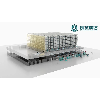
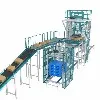
Fortucky has two 5G super factories and R&D centers, covering an area about 100,000 square meters. The 5G super factories is not only a technology center with advanced R&D strength and integration capabilities, but also is the largest manufacturing base for Fortucky, and is a beacon-like existence in the logistics industry.
Team building
We have a research and development team led by several doctors and masters, and have established extensive cooperative relations with many well-known domestic high-efficiency institutions, jointly undertaking a number of national, provincial and municipal scientific research projects. After nearly 20 years of development, the company has established an excellent research and development team integrating professional talents in mechanical design, electrical design, PLC control and software control.
R&D Strength
We attach great importance to the construction of the R&D system, establish a scientific research integration strategy, gather global scientific and technological R&D talents, and continuously increase R&D investment. The annual R&D investment is as high as 100 million CNY and we have obtained more than 300 intellectual property rights and established a complete intellectual property system.
Complete After-sales Service System
The Fortucky after-sales service system has the advantages of intelligent systems, flexible intelligent solutions and reliable operation systems. It can respond to needs quickly, including designing systems with complex requirements and making on-site adjustments when problems arise.
What Is Robot
A robot is a type of automated machine that can execute specific tasks with little or no human intervention and with speed and precision. The field of robotics, which deals with robot design, engineering and operation, has advanced remarkably in the last 50 years.


Increased Productivity: An Autonomous Mobile Robot (AMR) can perform full shifts, allowing production to run 24 hours a day without interruption.
Reduced Accidents at Work: Some tasks pose risks to workers, such as those in deteriorated environments with the possibility of collapse, work with toxic substances, or handling very heavy loads. Robots can perform these tasks, increasing occupational safety for operators.
Error Reduction: It is assumed that every production line has a percentage of errors. However, a robotic system has the precision to significantly reduce that percentage. This is one of the main benefits of robots in the workplace: the precision of a robot or mobile manipulator reduces the possibility of production errors and increases the quality of certain processes.
Increased Flexibility: There are many types of robots in the workplace, and therefore, the number of tasks that a robot can perform has increased considerably. Within a single industry, robots can be adapted to various applications, thus increasing flexibility and cost-effectiveness.
New Job Opportunities: More and more people are needed for designing, programming, and manufacturing robots, as well as for different areas of research and technological development. Furthermore, as productivity increases, it is logical that companies will grow and require more staff.
Betting on the Future: In today’s highly competitive, demanding, and globalized industrial landscape, being at the forefront of technology is crucial for business development. Investing in intelligent automation through robotic systems is equivalent to building a solid foundation for a business to remain profitable, competitive, and sustainable.
What Are the Main Components of a Robot?
Computation includes all of the components that make up a robot’s central processing unit, often referred to as its control system. Control systems are programmed to tell a robot how to utilize its specific components, similar in some ways to how the human brain sends signals throughout the body, in order to complete a specific task. These robotic tasks could comprise anything from minimally invasive surgery to assembly line packing.
Sensors provide a robot with stimuli in the form of electrical signals that are processed by the controller and allow the robot to interact with the outside world. Common sensors found within robots include video cameras that function as eyes, photoresistors that react to light and microphones that operate like ears. These sensors allow the robot to capture its surroundings and process the most logical conclusion based on the current moment and allows the controller to relay commands to the additional components.
A device can only be considered to be a robot if it has a movable frame or body. Actuators are the components that are responsible for this movement. These components are made up of motors that receive signals from the control system and move in tandem to carry out the movement necessary to complete the assigned task. Actuators can be made of a variety of materials, such as metal or elastic, and are commonly operated by use of compressed air (pneumatic actuators) or oil (hydraulic actuators) but come in a variety of formats to best fulfill their specialized roles.
Like the human body requires food in order to function, robots require power. Stationary robots, such as those found in a factory, may run on AC power through a wall outlet but more commonly, robots operate via an internal battery. Most robots utilize lead-acid batteries for their safe qualities and long shelf life while others may utilize the more compact but also more expensive silver-cadmium variety. Safety, weight, replaceability and lifecycle are all important factors to consider when designing a robot’s power supply.
End effectors are the physical, typically external components that allow robots to finish carrying out their tasks. Robots in factories often have interchangeable tools like paint sprayers and drills, surgical robots may be equipped with scalpels and other kinds of robots can be built with gripping claws or even hands for tasks like deliveries, packing, bomb diffusion and much more.
Uses of Robots
Manufacturing
Robots have revolutionized the manufacturing industry by enhancing efficiency, safety, and innovation. They perform repetitive tasks like welding, painting, quality control, and assembly with ease. By utilizing robots, these industrial machines boost productivity, speed, and consistency.
01
Agriculture
In agriculture, robots are used for planting, harvesting, and monitoring crops, and they help analyze growing conditions. The use of automated drones to spray pesticides greatly reduces labor costs and increases crop yields.
02
Energy
In the energy sector, robots perform tasks like inspecting and maintaining infrastructure, especially in hazardous conditions. These robots are used to inspect offshore oil rigs, drastically reducing health and safety risks.
03
Healthcare
Robots in the healthcare industry range from surgical robots to telemedicine robots and automated laboratory systems. This type of robotic assistance enhances procedures, precision, and patient recovery times. They also reduce surgeon fatigue and the physical strain on medical personnel.
04
Shipping and Delivery
Logistic robots assist humans with warehouse operations such as transporting (loading and unloading) goods from one area to another. The use of automated warehousing systems and delivery drones reduces the risk of human error and boosts productivity.
05
Robotics engineers design and build robots to perform different functions. Explore five different types of robotics and their various designs.
1. Pre-programmed: These robots have a pre-programmed design. They function to perform specific tasks, and they only execute the functions within their programming, with no deviation. Examples of pre-programmed robots include a mechanical arm with a single task on an assembly line and a robot that performs a specific medical procedure.
2. Teleoperated: These robots often operate in conditions that humans cannot or those that might pose safety risks to people. They work through human-directed remote control. Some examples include robots that perform underwater tasks, such as repairing pipelines or submarines, and robots that search for and rescue humans following a disaster like an earthquake.


3. Autonomous: These robots operate independently of human supervision. Autonomous robots perceive the environment through built-in sensors and adapt accordingly. Examples of robots that work independently include delivery robots and devices for vacuuming floors.
4. Augmenting: These robots enhance or replace human functions. Augmenting robots have sensors that may respond to a human’s brain or other body parts like muscles. Examples of augmenting robots include prosthetic limbs that can help humans with injury or disease regain motor function and exoskeletons that augment physical abilities.
5. Humanoid: These robots have a design that mimics humans, either in action or appearance. Humanoid robots help humans with personal assistance, education, entertainment, manufacturing, research, and search and rescue.
The role of robots in the different areas
Creating parts of the building
Robotic engineering machines of immense accuracy and precision mill both big and medium custom shaping behavior. Some robot companies often integrate various sensors into a smart space, making it possible to complete the whole process in one position in much less time.
Public Safety robotics
Artificial intelligence may seem much further-fetched for preventing serious crimes, but it is very plausible for the future that we are looking at. For example, drone footage would cause that to come quickly. Furthermore, automated detection of questionable activities is now a fact for security systems that rely on video. Modern tech will impact society in a really interesting sense: it will enable police officers to respond quickly if a suspected activity is detected.
The role of robots in the medical field
Robots that function in the medical field have both advantages and disadvantages. Robots should be more reliable, which will possibly result in a high operational performance rate. Yet the robots, while dealing with the patients, reduce the emotional value/feel a person has. I wouldn’t want medical robots to work, as it would damage the economy by getting jobs away from other people.
The role of robots in the Engineering field
Industries, nevertheless, utilize humanoid robots anyway to fulfill engineering roles. Joint Robotics Workshop and aircraft Group initiated a six-year collaborative research project to use mammalian industrial robots in aviation manufacturing plants. By using robots on airplane production lines, Airbus aims to alleviate a few of the more painstaking and risky activities human operators face. Then, human employees may focus on tasks of higher importance. The primary challenge is the small spaces such robots need to operate in and be able to move before the collision with both the things around them.
How Do I Choose the Correct Robot?
Define Your Application Requirements
Task Complexity: Evaluate the type of tasks the robot will handle, such as welding, assembly, painting, or material handling.
Payload and Reach: Determine the maximum payload the robot will need to carry and the reach required to access all work areas.
Consider Your Industry and Production Environment
Workspace Constraints: Assess the size of the workspace and any potential obstacles that could limit the robot’s movement.
Industry Compliance: Ensure the robot adheres to relevant industry standards and safety regulations.
Assess Performance and Precision Needs
Speed and Cycle Time: Identify the desired production speed to ensure the robot meets throughput requirements.
Precision and Repeatability: Choose a robot capable of delivering the precision and repeatability your application demands.
Evaluate Financial Benefits and ROI
Initial Investment vs. ROI: Compare the initial cost of the robot against the expected return on investment, considering factors like increased productivity and reduced labor costs.
Energy Efficiency: Opt for robots that offer energy-efficient operations, reducing long-term operational costs.
Explore Compatibility and Flexibility
Programming and Integration: Look for robots that are easy to program and integrate into existing automation systems.
Modular Design: Prioritize robots with modular designs that allow for future upgrades or changes to suit evolving production needs.
After-Sales Support: Select a vendor that offers comprehensive technical support, spare parts availability, and warranties.
Benefits of Regular Robot Maintenance
Here are the benefits of regular robot maintenance:
Increased Uptime: With routine inspections and servicing, you can catch small issues before they become big problems. Your robots will experience less unplanned downtime, allowing them to work longer.
Much Better Performance with (Almost) No Drop-off: When all components are in working order and properly calibrated, robots can achieve maximum speed and accuracy.
Cost Savings in the Long Run: Reactive maintenance, where you only service robots when they break down, costs significantly more than preventive maintenance. Parts and labor expenses are lower when you perform regular tune-ups. Robots that receive preventive maintenance also have a longer useful life, allowing you to delay or avoid costly replacements.
Overall Safer Operations: Well-maintained robots are safer for workers and the equipment around them. Their components and programming stay within proper specifications, making them less likely to malfunction in ways that could cause injury or damage. Safety mechanisms and sensors continue to function properly to avoid collisions and other incidents.
Reduced Tendency for Errors: With all parts in good working order, industrial robots make fewer mistakes. Their end-effectors grasp and manipulate materials accurately, and both software and hardware perform reliably to carry out programmed tasks precisely as intended.
How Often Should You Maintain Robots?
Every Week: Perform basic weekly inspections of your industrial robots to catch any issues early. Check that all cables and hoses are securely connected and undamaged. Inspect the robot arm and end-effector for any signs of wear or damage.
Monthly Maintenance: Once a month, conduct a more thorough check of your robot. Re-tighten any loose screws or bolts. Check and recalibrate sensors to ensure accurate positioning and movement. Test the robot's braking system to confirm it is working properly. Inspect the power supply for any signs of overheating or damage. Vacuum dust and debris from inside the robot cabinet and off its components.
Quarterly Service: Every 3-4 months, have a certified robot technician perform in-depth maintenance on your industrial robot. They can check and reprogram control units if needed. Have them test all motors, gears, and other moving parts to catch any issues early. They should also verify that safety mechanisms, like limit switches, are functioning properly. It’s a good idea to schedule routine part replacements during quarterly service to minimize downtime.
Yearly Overhaul: Once a year, have a major overhaul done on your robot (again, by a certified technician). They will fully disassemble the robot, clean and inspect all components, then reassemble and test it to like-new condition. This helps significantly reduce unplanned downtime from part failures and ensures maximum accuracy, performance, and safety for the coming year.
The group has more than 300 independent core intellectual property rights and over 1,000 global service cases. Its main customers include Huawei, Mengniu Dairy, CATL (Contemporary Artificial Intelligence), Mercedes-Benz, BMW, BYD, Tesla Inc, CNPC, Sinopec, PSBC, XCMG Group,Baowu Group and Zoomlion other industry leaders. Its projects cover fast-moving consumer goods, steel, silicon-based, construction machinery, automobiles, cold chain, electronics, pharmaceuticals, new energy, chemicals, agriculture and other fields.


Certifications


FAQ
We're professional robot manufacturers and suppliers in China, specialized in providing high quality customized service. We warmly welcome you to buy robot in stock here from our factory. Quality products and low price are available.
Cantilever Robot, Swing Arm Robot, Picking Robot