






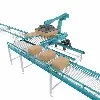
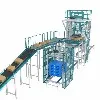

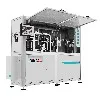

Production advantages
Fortucky has two 5G super factories and R&D centers, covering an area about 100,000 square meters. The 5G super factories is not only a technology center with advanced R&D strength and integration capabilities, but also is the largest manufacturing base for Fortucky, and is a beacon-like existence in the logistics industry.
Team building
We have a research and development team led by several doctors and masters, and have established extensive cooperative relations with many well-known domestic high-efficiency institutions, jointly undertaking a number of national, provincial and municipal scientific research projects. After nearly 20 years of development, the company has established an excellent research and development team integrating professional talents in mechanical design, electrical design, PLC control and software control.
R&D Strength
We attach great importance to the construction of the R&D system, establish a scientific research integration strategy, gather global scientific and technological R&D talents, and continuously increase R&D investment. The annual R&D investment is as high as 100 million CNY and we have obtained more than 300 intellectual property rights and established a complete intellectual property system.
Complete After-sales Service System
The Fortucky after-sales service system has the advantages of intelligent systems, flexible intelligent solutions and reliable operation systems. It can respond to needs quickly, including designing systems with complex requirements and making on-site adjustments when problems arise.
What Is Four-way Shuttle
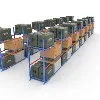
Four-way shuttle system is a new intelligent intensive storage solution. For the rack less than 3 levels, the system composed of four-way shuttle, intensive rack, climbing rails and etc.; If the rack has more than 3 levels, the shuttle system includes four-way shuttles, high-speed lifters, customized racks, inbound-outbound conveying devices, warehouse controlling system and etc.. Four-way shuttle can run automatically in both longitudinal and transverse directions, so it can satisfy the variety of inbound-outbound frequency by related adjustment. When there is some equipment failure, the system can still run normally, because the related tasks have been backed up mutually in other equipment. The four-way shuttle system fits for the box-type storage such as cartons or plastic boxes.


Advancement: The four-way shuttle is mainly used for the automatic handling and conveying of pallet goods in the warehouse. It is an intelligent storage equipment integrating intelligent control, automatic handling, unmanned guidance and other functions. The EBIL TECH four-way shuttle can cooperate with the hoist to complete the six dimensions of front and back, left and right, and up and down operations.
Flexibility: The four-way vehicle can automatically inventory and pick up, intelligent leveling, automatic climbing, automatic lane and layer change, and can also reach any position of the warehouse according to customer needs, so that the warehouse space utilization rate can be maximized. The 4 way shuttle racking system is suitable for special-shaped warehouses and can be matched with hoists to reach any height required by customers.
Practicability: The height of the four-way shuttle cart is small, and the distance between the upper surface of the trolley's track and the ground is only 300mm, which can efficiently use the warehouse space.
Reliability: All equipment products and control components in the 4 way shuttle car is very reliable and sophisticated. The control system adopts simple and stable control elements, uses specific algorithms, and combines the simple and solid mechanical structure of the trolley to achieve the purpose of stable, accurate, fast and reliable operation of the shuttle car.
Applications of Four way Shuttle
●Rapid Accessibility: Ideal for retail environments with high turnover rates, these systems expedite the movement and access of goods, allowing for quick adjustments to inventory and demand fluctuations.
●Enhanced Flexibility: Offers the scalability needed to handle peak and off-peak periods efficiently, ensuring that businesses can respond to consumer demands without delay.
●Enhanced Worker Safety: Operates effectively in environments as cold as -13°F, minimizing staff exposure to extreme conditions, which is crucial in cold storage operations.
●Optimal Product Preservation: Ensures that products, particularly perishables, are stored and retrieved without compromising their quality, which is essential for maintaining compliance with health and safety standards.
●Compliance with Hygiene Standards: Systems are designed to operate in clean environments, ensuring that food safety regulations are met.
●Efficient Handling of Perishables: Supports the quick turnover of products to maximize freshness and minimize waste, which is essential for the food and beverage sector.
●Heavy Load Handling: Capable of transporting up to 3,307 lbs, making it suitable for industries that deal with heavy or bulky raw materials.
●Adaptability to Environments: Functions efficiently in both partially and fully automated warehouses, providing versatility across various industrial operations.
The Difference Between Four-Way Shuttle System and Stacker Crane Operated ASRS System
Different Utilization of Warehouse Space
The four-way shuttle rack structure is similar to drive-in/drive-through racks, enabling intensive storage. This advantage allows the four-way shuttle to directly access any designated cargo space from the track, while the stacker can only access goods on both sides of the aisle, limiting its flexibility. Thus, the two storage solutions have different theoretical warehouse access rates.
Different Working Efficiency
In practical applications, the work efficiency of the four-way shuttle automated warehouse is generally lower than that of the stacker automated ASRS system. This is primarily due to the lower running speed of the four-way shuttle. All traffic for the four-way shuttle must follow a predetermined route, requiring it to lift the body for steering. Although the four-way shuttle operates with multiple linked equipment, which can enhance overall warehouse efficiency, the stacker operates on a single roadway with fixed tracks. While this allows for faster operation, the efficiency of stacker cranes limits the overall efficiency of inbound and outbound storage.
Difference in Cost
Typically, in a high-tech automated ASRS warehouse, each channel requires a stacker, which can be costly and increase the total expenses. In contrast, the four-way shuttle warehouse's quantity can be adjusted based on overall efficiency requirements. Generally, the storage solution of the four-way shuttle system is more cost-effective than that of the stacker automated ASRS warehouse.
Energy Consumption Level
Four-way shuttle vehicles typically charge using dedicated charging piles. Each vehicle requires one charging pile with a power rating of 1.3 kW and consumes 0.065 kW for each in/out storage cycle. In contrast, stackers, which have a total charging power of 30 kW, consume 0.6 kW for each in/out storage cycle.
Running Noise
Stackers tend to have a large self-weight, generally between 4-5 tons, which generates significant operational noise. Conversely, the four-way shuttle, powered by lithium batteries and with a lighter weight, operates more quietly.
Safety Protection
The four-way shuttle runs smoothly and incorporates various safety measures, such as fire protection and smoke and temperature alarms, which generally reduce the likelihood of safety accidents. Compared to stackers, which operate on fixed tracks with trolley line power supply, the four-way shuttle system tends to have fewer safety issues.
Anti-Risk Ability
In a stacker ASRS warehouse, if a single machine fails, the entire roadway shuts down. In contrast, if a single four-way shuttle fails, the rest of the warehouse remains operational. Other vehicles can push the faulty one out of the roadway, allowing other four-way shuttles to continue their tasks.
Later Expansion
Once the overall layout of a stacker ASRS warehouse is established, it cannot be changed, nor can the number of stackers be adjusted. However, the four-way shuttle system allows for the addition of more shuttles and the expansion of shelves according to future needs, facilitating warehouse growth.
Warehouse Layout and Space Constraints
Assess your warehouse layout and space constraints to determine the most suitable configuration for the 4-way pallet shuttle system. Consider factors such as aisle width, ceiling height, and available floor space. Choose a system that maximizes storage capacity while maintaining efficient access to palletized goods.
Pallet Dimensions and Weight Capacity
Consider the dimensions and weight capacity of the pallets you'll be storing in the shuttle system. Ensure that the system can accommodate the size and weight of your typical pallet loads without compromising safety or efficiency. Verify the maximum weight capacity per shuttle and per level to avoid overloading the system.
Compatibility with Existing Racking Systems
Evaluate the compatibility of the 4-way pallet shuttle system with your existing racking infrastructure. Determine whether the system is compatible with your pallet racking configuration, including pallet rack dimensions, beam spacing, and load capacity. Choose a system that integrates seamlessly with your current setup to minimize installation time and costs.


Throughput Requirements
Assess your throughput requirements to determine the necessary speed and efficiency of the pallet shuttle system. Consider factors such as the frequency of pallet movements, order picking rates, and peak operational periods. Choose a system that can meet your throughput demands while maintaining reliability and performance.
Automation and Control Options
Consider the level of automation and control options offered by the 4-way pallet shuttle system. Evaluate features such as remote control capabilities, real-time monitoring, and compatibility with warehouse management systems (WMS). Choose a system that provides the desired level of automation to streamline operations and improve productivity.
Maintenance and Support Services
Assess the availability of maintenance and support services for the selected pallet shuttle system. Consider factors such as warranty coverage, spare parts availability, and technical support. Choose a system from a reputable manufacturer or supplier that offers reliable maintenance and support services to minimize downtime and ensure optimal system performance.
A four-way shuttle system consists of multiple components working together to enable efficient material handling and storage operations in automated warehouses. The specific components may vary depending on the manufacturer and the design of the system, but here are the key elements typically found in a four-way shuttle system:
Shuttle Vehicles: The shuttle system includes a fleet of shuttle vehicles that move within the warehouse. These vehicles are compact and designed to navigate narrow aisles, allowing them to access storage locations with high density.
Storage Racks or Shelves: The warehouse is equipped with specialized storage racks or shelves that are designed to accommodate the four-way shuttle vehicles. These racks or shelves provide the structure and support for storing goods in a dense and organized manner.
Shuttle Tracks or Guiding Systems: To ensure precise movement and navigation, four-way shuttle systems often incorporate tracks or guiding systems. These can be physical tracks embedded in the warehouse floor or magnetic or optical guidance systems that help the shuttle vehicles follow predetermined paths.
Control and Software System: The control and software system is the central component that manages and coordinates the operation of the four-way shuttle system. It includes a warehouse management system (WMS) or control software that controls the movement of the shuttle vehicles, tracks inventory, and optimizes material flow.
Communication Network
A communication network enables seamless data exchange between the control system, shuttle vehicles, and other warehouse systems. This network allows for real-time monitoring, tracking, and coordination of the shuttle system's activities.
Lift Mechanisms
Four-way shuttle systems often incorporate lift mechanisms to move goods vertically between different levels of storage. These lift mechanisms can be integrated with the shuttle vehicles or positioned at specific locations within the warehouse.
Load Handling Devices
Load handling devices, such as forks, platforms, or conveyor systems, are attached to the shuttle vehicles. These devices facilitate the picking, placing, and transportation of goods within the warehouse.
Sensors and Safety Features
Sensors are strategically placed throughout the shuttle system to ensure safe and efficient operation. These sensors detect obstacles, monitor the position and movement of the shuttle vehicles, and contribute to collision avoidance and worker safety.
Power and Charging Infrastructure
The four-way shuttle system requires a power supply to operate the shuttle vehicles and supporting equipment. Charging stations or infrastructure may be provided to recharge the shuttle vehicle batteries during idle periods or as needed.
Maintenance and Diagnostic Tools
The system may include maintenance and diagnostic tools to monitor the performance of the shuttle vehicles, detect faults or errors, and facilitate maintenance and repair activities.
Maintenance of a Four-way Shuttle system
Proper maintenance is crucial for ensuring the optimal performance and longevity of a Four-way Shuttle system. Here are some maintenance practices to consider:
Regular Inspections: Conduct routine inspections of the Four-way Shuttle system to identify any signs of wear, damage, or malfunction. This includes checking the shuttle device, rails/tracks, rack structure, control system, sensors, and other components. Inspections should cover mechanical, electrical, and structural aspects.
Lubrication: Apply lubrication to moving parts of the shuttle device and other components as recommended by the manufacturer. This helps reduce friction, prevent excessive wear, and ensure smooth operation. Follow the manufacturer's guidelines for the appropriate lubricants and frequency of lubrication.
Cleaning: Keep the Four-way Shuttle system clean and free from debris, dust, or other contaminants that can hinder its performance. Regularly clean the shuttle device, rails/tracks, rack structure, and sensors. Use appropriate cleaning methods and materials to avoid damaging sensitive components.
Calibration: Periodically calibrate sensors and control systems to maintain accuracy and reliability. This includes verifying the proper functioning of position sensors, load sensors, and other measurement devices. Follow the manufacturer's instructions for calibration procedures or consult qualified technicians if needed.
Software Updates: If the Four-way Shuttle system includes software components, ensure that the control system and associated software are up to date. Stay informed about software updates or patches provided by the manufacturer and apply them as recommended to benefit from performance improvements, bug fixes, and security enhancements.
Battery Maintenance: If the shuttle device is battery-powered, follow the manufacturer's guidelines for battery maintenance. This may include regular checks of battery health, charging protocols, and replacement of worn-out batteries as necessary. Proper battery maintenance helps ensure reliable operation and extends the lifespan of the shuttle device.
Training and Operator Awareness: Provide training to operators and maintenance personnel on the proper operation, maintenance, and safety procedures for the Four-way Shuttle system. Educate them about common issues, troubleshooting techniques, and reporting requirements. Encourage operators to promptly report any abnormalities or concerns they observe during system operation.
Documentation and Record-Keeping: Maintain detailed records of maintenance activities, inspections, repairs, and any modifications made to the system. This documentation can help track the system's history, identify recurring issues, and ensure compliance with warranty or service requirements.
Manufacturer's Guidelines: Always refer to the manufacturer's maintenance guidelines and recommendations specific to the Four-way Shuttle system you are using. Follow their instructions for maintenance intervals, procedures, and any specialized tools or techniques required.
The group has more than 300 independent core intellectual property rights and over 1,000 global service cases. Its main customers include Huawei, Mengniu Dairy, CATL (Contemporary Artificial Intelligence), Mercedes-Benz, BMW, BYD, Tesla Inc, CNPC, Sinopec, PSBC, XCMG Group,Baowu Group and Zoomlion other industry leaders. Its projects cover fast-moving consumer goods, steel, silicon-based, construction machinery, automobiles, cold chain, electronics, pharmaceuticals, new energy, chemicals, agriculture and other fields.


Certifications


FAQ
We're professional four-way shuttle manufacturers and suppliers in China, specialized in providing high quality customized service. We warmly welcome you to buy four-way shuttle in stock here from our factory. Quality products and low price are available.
Clamp type Four way Shuttle, Heavy duty Four way Shuttle, four way shuttle