

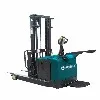

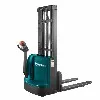



Your Professional Rail Guided Vehicle Supplier
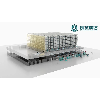
Fortucky is a professional integrated service provider of intelligent manufacturing and smart logistics system solutions, offering enterprises stable and efficient intelligent logistics solutions, high-end intelligent core logistics equipment, and professional intelligent logistics operation services.
Total Solutions
As a high-end smart logistics service provider, Fortucky has rich experience. We provide customers with end-to-end intelligent solutions that integrate consulting, design, manufacturing, installation, operation and after-sales service.
Global Expansion Capabilities
In recent years, Fortucky has actively explored overseas markets, committed to providing high-quality products and services to global customers, and gradually achieved global expansion of its business scale.
Technical Strength
Fortucky attaches great importance to the construction of the R&D system, establishes a scientific research integration strategy, gathers global scientific and technological R&D talents, and continuously increases R&D investment. The annual R&D investment is as high as 100 million yuan, and it has obtained more than 300 intellectual property rights and established a complete intellectual property system.
Complete After-sales Service System
The Fortucky after-sales service system has the advantages of intelligent systems, flexible intelligent solutions and reliable operation systems. It can respond to needs quickly, including designing systems with complex requirements and making on-site adjustments when problems arise.


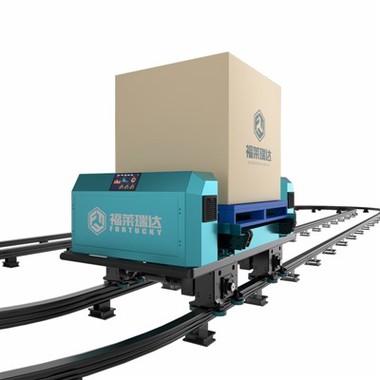


Parameter
|
Technical Parameters |
Unit |
Typical range/value |
|
Rated load |
kg |
3000 |
|
Driving speed |
m/min |
≤200 |
|
Driving acceleration |
m/s² |
2 |
|
Positioning accuracy |
mm |
±3 |
|
GPS |
|
Laser/barcode positioning |
|
Control method |
|
PLC control |
|
Drive method |
|
Motor driven |
|
Operation method |
|
Manual/Single -machine/connecting machine/maintenance |
|
Communication method |
|
Wireless Ethernet |
|
Power supply |
|
Slide |
|
Track |
|
Dedicated orbit, dual -track, straight operation, running |
Types of Rail Guided Vehicle
The rail guided vehicles produced by our company mainly include the following types:
Go Straight Rail Guided Vehicle
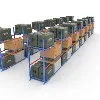
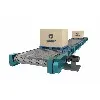
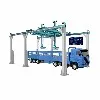
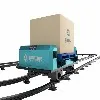
Go straight Rail Guided Vehicle (usually dual -track form) is also known as duplex shuttle car. It conducts reciprocating movement on a straight -line track and transports materials from one site to another through a straight line diameter.
Double Station Rail Guided Vehicle
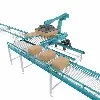
Double-station Rail Guided Vehicle is a type of double-station straight shuttle vehicle. It reciprocates on a linear track and transports pallets horizontally or vertically as needed.
Circular Rail Guided Vehicle
Circular Rail Guided Vehicle, also known as circular -shaped orbit shuttle, circular -shaped rail RGV, etc,. The orbit of the circular Rail Guided Vehicle is arranged in the plane, and the track can be circulated in a loop while running multiple shuttle.
Increased Safety
AGV’s are fitted with sensors and guidance systems that allow them to make their way through a facility without colliding with any other objects. Once it detects the presence of an object along its path, it comes to a complete stop.
Increased Accuracy
The advantages of automated guided vehicles do not stop with increased safety. With a programmed route and the aid of sensors, the AGV can pick up and offload materials without breaks, slip-ups, or miscalculations.
Reduced Error Rate
Taking the human factor out of the equation reduces the rate of error. An AGV is programmed for precision and accuracy. Of course, machines can still have glitches, but the probability of error is very low.
Scalable
Whenever you introduce change in your business, it’s best to do it gradually. Another advantage on the list of automated guided vehicles pros and cons is that you don’t have to overhaul your entire warehouse or production operation overnight.


Maneuvers Easily
When considering the automated guided vehicles pros and cons you have to take into account how the AGV moves around a facility. An AGV follows a predetermined route around the facility without deviating from its path. AGV’s use different guidance systems depending on the model specified.
More Room for Cargo
Unlike a manual machine, an AGV does not require a driver. This means that an AGV has more space for handling products. The AGV vehicle only needs the space for the components and sensors that enable it to operate and load carrying. The design of the AGV is very flexible.
Works Long Hours
AGVs are generally powered by batteries and can work for as long as their batteries have sufficient charge. AGV’s are designed with sufficient battery capacity to operate for the duration of a work shift. As the battery charge depletes, the AGV can navigate back to a charging point to recharge overnight, ready for the next day’s operation.
The Difference Between Automatic Guided Vehicles and Rail Guided Vehicles
|
Basis |
Automatic Guided Vehicles |
Rail Guided Vehicles |
|
Mobility and Navigation |
They use sophisticated sensors for dynamic, flexible navigation movement and efficient tracking. |
It follows a predefined path using GPS, lasers and sensor technology, which help to ensure efficient material movement and real-time tracking. |
|
Flexibility and Scalability |
AGVs are highly scalable and flexible because they can self-adapt to new jobs and pathways without requiring significant infrastructure changes. |
As RGVs are designed for predetermined routes, they offer scalable solution for industries catering to navigational pathways. |
|
Installation and Infrastructure Requirements |
It requires navigational aids such as QR codes and magnetic strips. |
RGVs may function in a variety of environments and require infrastructure costs for installing rails or tracks. |
|
Application Scenario |
It is used for material handling in various factories and warehouses. |
It can be employed in assembly line operations, material movement and storage operations along a predetermined route. |
Heavy-Duty Industrial Casters: Since RGVs often transport heavy loads for extended periods, casters with high load capacity are essential for safe, stable transport without deformation.
Wear-Resistant Casters: With frequent operation, casters made of durable materials such as polyurethane (PU), high-strength rubber, or nylon help reduce long-term wear and tear.
Low-Noise/Smooth-Rolling Casters
For industries like electronics or healthcare, low-noise, smooth-rolling casters ensure a quiet environment and maintain operational quality.
Shock-Absorbing Casters
For areas with floor height variations, seams, or bumps, shock-absorbing casters enhance stability and performance.
Directional or Swivel Caster Designs
Depending on whether the RGV needs to turn or follow complex routes, choose directional casters for straight travel or swivel casters for agile turning.
Ordering Process

Packaging and Shipping
|
Packaging |
Thick anti-collision sponge, corrugated cardboard packaging |
|
Shipping |
We will help you to choose the best shipping way according to your detail requirements. By sea, by air, or by express, etc. |
Cooperative Partner

Our Certificate


FAQ
We're professional rail guided vehicle manufacturers and suppliers in China, specialized in providing high quality customized service. We warmly welcome you to buy rail guided vehicle in stock here from our factory. Quality products and low price are available.
Heavy duty Rail Guided Vehicle, Pallet Rail Guided Vehicle, rail guided vehicle