

Can 3D vision robots be used in the food industry?
Dec 05, 2025
Leave a message
In recent years, the integration of advanced technologies into various industries has been a transformative force, and the food industry is no exception. Among these technologies, 3D vision robots have emerged as a promising innovation with the potential to revolutionize food production and processing. As a 3D Vision Robot supplier, I am excited to explore the question: Can 3D vision robots be used in the food industry?
The Capabilities of 3D Vision Robots
Before delving into their applications in the food industry, it is essential to understand the capabilities of 3D vision robots. These robots are equipped with advanced 3D vision sensors that can capture detailed information about the shape, size, and position of objects in three - dimensional space. This allows them to perform tasks with a high degree of precision and adaptability.
One of the key advantages of 3D vision robots is their ability to handle complex and irregularly shaped objects. In the food industry, products come in a wide variety of shapes and sizes, from round fruits to irregularly shaped pastries. Traditional robotic systems may struggle to accurately pick and place these items, but 3D vision robots can easily identify and manipulate them.
Another significant capability is their real - time perception. The 3D vision sensors continuously update the robot's understanding of the environment, enabling it to respond quickly to changes. For example, if there is a slight shift in the position of food items on a conveyor belt, the robot can adjust its movements accordingly.
Applications of 3D Vision Robots in the Food Industry
Sorting and Grading
Sorting and grading are crucial processes in the food industry. 3D vision robots can be used to sort food products based on their size, shape, color, and quality. For instance, in the fruit industry, robots can distinguish between ripe and unripe fruits, as well as classify them according to their size. This not only improves the efficiency of the sorting process but also ensures a more consistent quality of the final products.
The 3D vision system can detect surface defects, such as bruises or mold on fruits and vegetables. By removing these defective items from the production line, the overall quality of the food supply is enhanced. This is particularly important for meeting consumer expectations and regulatory requirements.
Picking and Packaging
Picking and packaging are labor - intensive tasks in the food industry. 3D vision robots can automate these processes, increasing productivity and reducing labor costs. The robots can accurately pick food items from a conveyor belt or a bin and place them into packaging containers.
For delicate food products, such as cakes or chocolates, the gentle handling capabilities of 3D vision robots are invaluable. The robots can be programmed to apply the right amount of force to avoid damaging the products during the picking and packaging process. Moreover, they can work continuously without fatigue, ensuring a high - speed and reliable packaging operation.
Palletizing
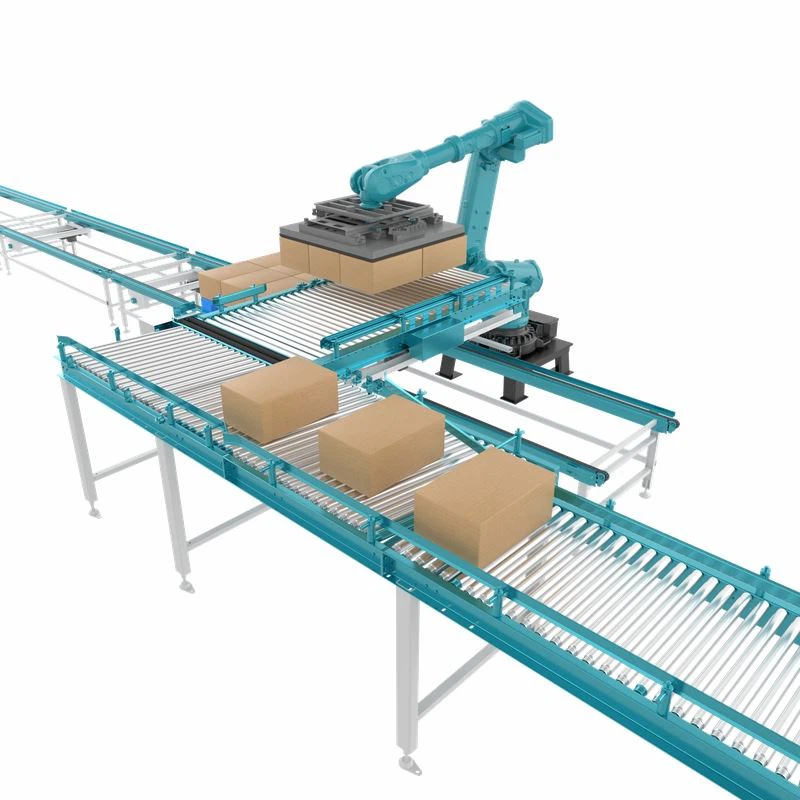
Palletizing is the process of stacking food products on pallets for storage and transportation. Palletizing Robot with 3D vision can optimize the palletizing process by arranging the products in the most efficient way. The 3D vision system can analyze the shape and size of the products and determine the best stacking pattern to maximize the use of space on the pallet.
This not only reduces the cost of storage and transportation but also minimizes the risk of product damage during handling. The robots can work in a variety of environments, including cold storage facilities, where human labor may be less efficient.
Quality Inspection
Quality inspection is a critical step in ensuring the safety and quality of food products. 3D vision robots can perform detailed inspections of food items, looking for any signs of contamination, improper filling, or incorrect labeling.
The high - resolution 3D vision sensors can detect even the smallest defects that may be missed by human inspectors. By integrating 3D vision robots into the quality control process, food manufacturers can improve the reliability of their inspections and reduce the risk of faulty products reaching the market.
Challenges and Considerations
While 3D vision robots offer many benefits to the food industry, there are also some challenges and considerations that need to be addressed.
Hygiene and Sanitation
The food industry has strict hygiene and sanitation requirements. 3D vision robots need to be designed and maintained in a way that meets these standards. This may involve using materials that are easy to clean and disinfect, as well as implementing proper cleaning procedures.
Cost
The initial investment in 3D vision robots can be relatively high. Food manufacturers need to carefully evaluate the cost - benefit ratio before implementing these systems. However, in the long run, the increased productivity, reduced labor costs, and improved product quality can offset the initial investment.

Integration with Existing Systems
Integrating 3D vision robots into existing food production lines can be a complex process. The robots need to be compatible with other equipment, such as conveyor belts, packaging machines, and control systems. This requires careful planning and coordination between the robot supplier and the food manufacturer.
Case Studies
Several food companies have already started to adopt 3D vision robots with great success. For example, a large - scale bakery has implemented Swing Arm Robot with 3D vision for picking and packaging pastries. The robots have significantly increased the production speed and reduced the number of damaged products.
In the meat processing industry, a company has used Cantilever Robot with 3D vision for sorting and grading meat cuts. The 3D vision system can accurately measure the thickness and quality of the meat, resulting in more consistent products and better customer satisfaction.
Conclusion
In conclusion, 3D vision robots have significant potential in the food industry. Their capabilities in sorting, grading, picking, packaging, palletizing, and quality inspection can bring numerous benefits, including increased productivity, improved product quality, and reduced labor costs.
However, to fully realize these benefits, food manufacturers need to address the challenges related to hygiene, cost, and system integration. As a 3D Vision Robot supplier, we are committed to working closely with food companies to develop customized solutions that meet their specific needs.
If you are a food manufacturer interested in exploring the use of 3D vision robots in your production process, we invite you to contact us for a detailed discussion. Our team of experts can provide you with more information about our products and how they can be integrated into your existing systems. Let's work together to take your food production to the next level.
References
- Smith, J. (2020). "Advances in Robotics for the Food Industry." Journal of Food Engineering.
- Brown, A. (2021). "3D Vision Technology in Manufacturing: Applications and Challenges." Manufacturing Review.
- Green, C. (2022). "Automation in the Food Processing Sector: The Role of 3D Vision Robots." Food Technology Magazine.