

Can a Cantilever Robot work with irregularly shaped objects?
May 21, 2025
Leave a message
Hey there! As a supplier of cantilever robots, I often get asked a pretty interesting question: Can a cantilever robot work with irregularly shaped objects? Well, let's dive right into it and find out.
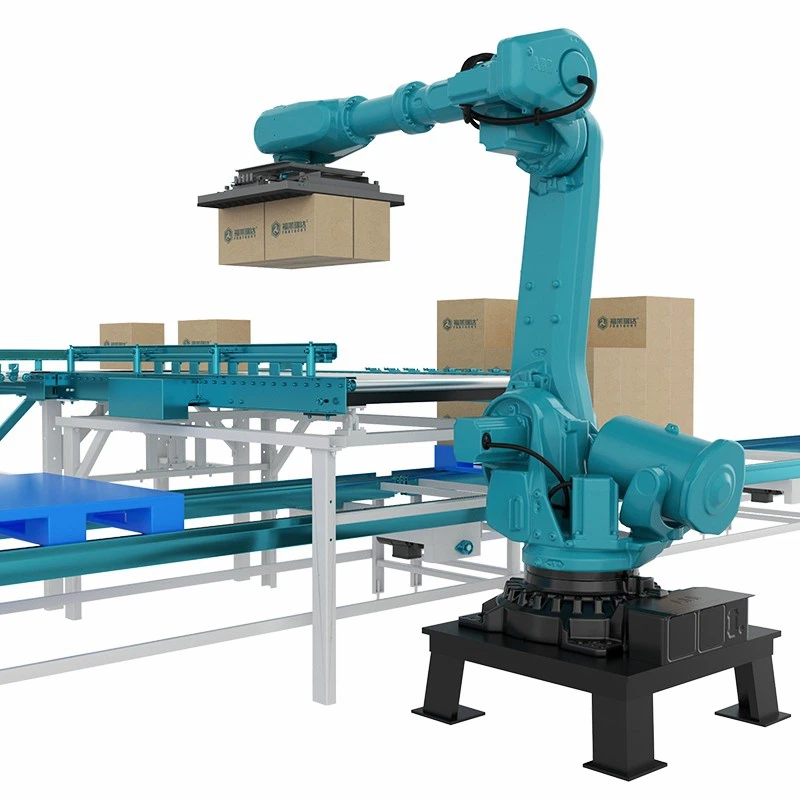
First off, let's talk a bit about what a cantilever robot is. It's a type of industrial robot that has a unique structure. It's like an arm that extends out from a fixed base, kind of like a diving board sticking out from a pool deck. This design gives it a lot of flexibility and reach, which is super useful in all sorts of industrial applications.
Now, when it comes to working with irregularly shaped objects, it's not as straightforward as dealing with nice, neat, rectangular boxes. Irregularly shaped objects can come in all sorts of forms - they could be curved, have odd angles, or be bumpy. And this can pose some challenges for a robot.
One of the main challenges is picking up these objects. A cantilever robot needs to be able to grasp the object securely without it slipping or falling. With irregular shapes, finding the right grip points can be tricky. But here's the good news - modern cantilever robots are equipped with some pretty advanced technologies to handle this.
For example, many of our cantilever robots are integrated with 3D Vision Robot systems. These systems use cameras and sensors to create a 3D map of the object. This allows the robot to accurately identify the shape, size, and orientation of the irregularly shaped object. With this information, the robot can then calculate the best way to approach and grasp the object.
Let's say you have a bunch of oddly shaped metal parts that need to be sorted and placed on a conveyor belt. The 3D vision system on our cantilever robot will scan each part as it comes down the line. It'll analyze the shape and figure out the optimal gripping points. Then, the robot's arm will move in precisely, using its gripper to pick up the part securely. This is all done in a matter of seconds, making the whole process super efficient.
Another technology that helps our cantilever robots work with irregularly shaped objects is force sensing. The grippers on our robots are equipped with sensors that can detect the amount of force being applied. This is crucial when dealing with fragile or delicate irregular objects. The robot can adjust the gripping force based on the shape and properties of the object. For instance, if it's a soft, irregularly shaped foam piece, the robot will apply a gentle grip to avoid damaging it.
In addition to picking, our cantilever robots are also great at handling irregularly shaped objects during palletizing. Palletizing Robot applications often involve stacking objects on pallets in an organized way. With irregular shapes, this can be a bit of a puzzle. But our robots are up for the challenge.
The 3D vision system helps the robot determine the best way to stack the irregular objects on the pallet. It can analyze the available space on the pallet and figure out how to arrange the objects to maximize stability and space utilization. This is especially important in industries like food and beverage, where products can come in all sorts of packaging shapes.
Let's take an example of a bakery. They have loaves of bread in different shapes - some are round, some are oblong. Our cantilever robot can use its 3D vision and force sensing capabilities to pick up each loaf carefully and stack them on a pallet in an efficient and stable manner. This not only saves time but also reduces the risk of damage to the products.

Now, you might be wondering about the programming of these robots. Well, we've made it as user - friendly as possible. Our robots come with intuitive programming interfaces that allow operators to easily teach the robot how to handle different irregularly shaped objects. You don't need to be a robotics expert to get the robot up and running.
For example, if you have a new type of irregularly shaped product that you want the robot to handle, you can use the programming interface to show the robot the object's shape and the desired actions. The robot will then learn and adapt to handle the new object efficiently.
But it's not just about the technology. Our team of experts is always on hand to provide support. Whether you need help with programming, troubleshooting, or just have questions about how the robot can work with your specific irregularly shaped objects, we're here to assist you.
In conclusion, a cantilever robot can definitely work with irregularly shaped objects. Thanks to advanced technologies like 3D vision and force sensing, along with user - friendly programming, our robots are well - equipped to handle the challenges posed by these objects. Whether it's picking, sorting, or palletizing, our cantilever robots can provide efficient and reliable solutions for your industrial needs.
If you're in the market for a robot that can handle irregularly shaped objects, we'd love to talk to you. We can provide a detailed analysis of your requirements and show you how our cantilever robots can fit into your production line. Just reach out to us, and let's start a conversation about how we can help you improve your operations.
References
- Robotics Industry Association - General information on industrial robot applications
- Technical papers on 3D vision systems in robotics
- Case studies on cantilever robot usage in various industries