

How do picking robots optimize the picking path?
Aug 05, 2025
Leave a message
In the modern era of warehousing and logistics, efficiency is the name of the game. One of the key players in enhancing this efficiency is the picking robot. As a Picking Robot supplier, I've witnessed firsthand how these machines are revolutionizing the way goods are picked in warehouses. In this blog, we'll delve into how picking robots optimize the picking path, a crucial aspect that directly impacts productivity and cost - effectiveness.
The Basics of Picking Path Optimization
Picking path optimization refers to the process of determining the most efficient route for a picking robot to follow while retrieving items from a warehouse. The goal is to minimize the time and distance traveled by the robot, which in turn reduces the overall picking time and energy consumption.
Traditional manual picking methods often involve pickers walking long distances through the warehouse to collect items. This not only leads to physical fatigue but also results in significant time wastage. Picking robots, on the other hand, can analyze the layout of the warehouse and the location of items to find the shortest and fastest path.
Factors Influencing Picking Path Optimization
-
Warehouse Layout
The layout of the warehouse plays a fundamental role in picking path optimization. A well - organized warehouse with clearly defined aisles and storage areas can make it easier for the picking robot to navigate. For example, a warehouse with a grid - like layout allows the robot to move in a more linear fashion, reducing the number of turns and maneuvers required. Our Picking Robot is designed to adapt to various warehouse layouts, whether it's a narrow - aisle warehouse or a large open - floor plan. Picking Robot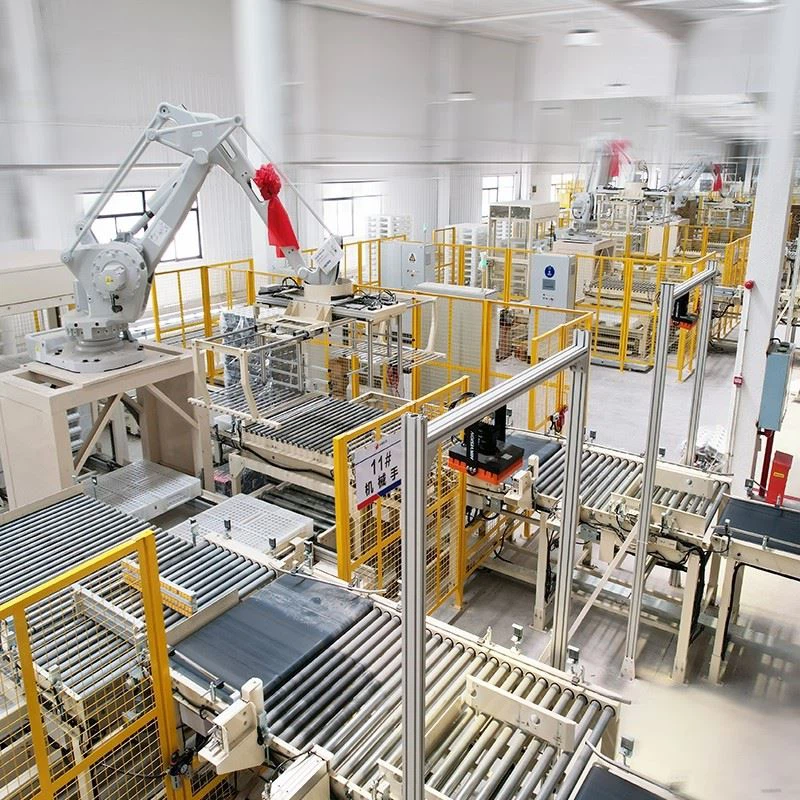

-
Item Location and Distribution
The location and distribution of items within the warehouse also affect the picking path. Items that are frequently picked should be stored in easily accessible locations, such as near the picking station. Picking robots use algorithms to analyze the historical picking data and determine the optimal storage locations for different items. This way, the robot can minimize the distance traveled to pick the most popular items. -
Order Volume and Complexity
The volume and complexity of orders can vary greatly. Some orders may consist of a single item, while others may include multiple items from different locations in the warehouse. Picking robots need to be able to handle these variations efficiently. For small orders, the robot can quickly pick the items and return to the starting point. For large and complex orders, the robot may need to group the items based on their location and pick them in a strategic sequence.
Algorithms for Picking Path Optimization
-
Genetic Algorithms
Genetic algorithms are inspired by the process of natural selection. These algorithms start with a set of possible picking paths (the population) and then use operators such as selection, crossover, and mutation to evolve the population over generations. The fittest paths (those with the shortest distance or time) are more likely to be selected for the next generation. This iterative process continues until an optimal or near - optimal path is found. Our Picking Robot utilizes advanced genetic algorithms to continuously improve the picking path based on real - time data. -
Ant Colony Optimization (ACO)
Ant Colony Optimization is another popular algorithm for path optimization. It is based on the behavior of ants searching for food. Ants leave pheromone trails on the paths they travel, and other ants are more likely to follow the paths with stronger pheromone concentrations. In the context of picking robots, the pheromone trails represent the desirability of different paths. The robot starts by exploring different paths randomly and then gradually builds up the pheromone trails on the more efficient paths. Over time, the robot converges on the optimal picking path. -
Dijkstra's Algorithm
Dijkstra's algorithm is used to find the shortest path between two nodes in a graph. In the case of a warehouse, the nodes can represent storage locations, and the edges can represent the paths between these locations. The algorithm starts from a source node and explores all the neighboring nodes, calculating the shortest distance to each node. It then selects the node with the shortest distance and repeats the process until it reaches the destination node. This algorithm is particularly useful for finding the shortest path in a static warehouse environment.
Real - Time Adaptation and Flexibility
One of the key advantages of modern picking robots is their ability to adapt to real - time changes in the warehouse environment. For example, if an item is out of stock or a new order is received, the robot can quickly recalculate the picking path. Our Picking Robot is equipped with sensors and real - time monitoring systems that allow it to detect obstacles, changes in the layout, or new item locations. This ensures that the robot can continue to operate efficiently even in a dynamic environment.
Integration with Other Warehouse Systems
Picking robots do not operate in isolation. They need to be integrated with other warehouse systems, such as the warehouse management system (WMS) and the inventory management system. The WMS provides the robot with information about the orders, item locations, and inventory levels. The robot then uses this information to optimize the picking path. Integration with the inventory management system allows the robot to update the inventory levels in real - time as it picks the items. This seamless integration ensures that the entire warehouse operation runs smoothly and efficiently.
Comparison with Other Robot Types
-
Palletizing Robot
While picking robots are focused on retrieving individual items from storage, palletizing robots are used to stack items onto pallets for shipping. Palletizing robots are designed to handle heavy loads and perform repetitive stacking tasks. However, they do not have the same level of flexibility and precision as picking robots when it comes to item selection and path optimization. Palletizing Robot -
Cantilever Robot
Cantilever robots have a unique design with a cantilever arm that can reach into hard - to - access areas. They are often used for tasks such as loading and unloading large items. However, their range of motion and speed may be limited compared to picking robots, which are designed for high - speed and precise item picking in a warehouse environment. Cantilever Robot
Conclusion
Picking robots are a game - changer in the warehousing and logistics industry. By optimizing the picking path, these robots can significantly improve the efficiency of warehouse operations, reduce labor costs, and enhance customer satisfaction. As a Picking Robot supplier, we are committed to providing high - quality robots that utilize the latest technologies and algorithms for picking path optimization.
If you're looking to enhance the efficiency of your warehouse operations, we invite you to contact us for a detailed discussion about our Picking Robot solutions. Our team of experts will work with you to understand your specific requirements and provide a customized solution that meets your needs.
References
- LaValle, S. M. (2006). Planning Algorithms. Cambridge University Press.
- Dorigo, M., & Stützle, T. (2004). Ant Colony Optimization. MIT Press.
- Cormen, T. H., Leiserson, C. E., Rivest, R. L., & Stein, C. (2009). Introduction to Algorithms. MIT Press.