

How does a Cantilever Robot ensure the quality of work?
Jul 11, 2025
Leave a message
As a supplier of Cantilever Robots, I've witnessed firsthand the transformative impact these machines have on various industries. In this blog post, I'll delve into how a Cantilever Robot ensures the quality of work, exploring its features, applications, and the technological advancements that contribute to its reliability.
Precision Engineering for Accurate Work
One of the primary ways a Cantilever Robot ensures the quality of work is through its precision engineering. These robots are designed with high - precision components that allow for accurate movement and positioning. The mechanical structure of a Cantilever Robot is carefully calibrated to minimize errors during operation. For example, the joints of the robot are engineered to have a very low backlash, which means that when the robot moves from one position to another, there is minimal lost motion. This precision is crucial in applications such as 3D Vision Robot tasks, where the robot needs to interact with objects in a three - dimensional space with high accuracy.
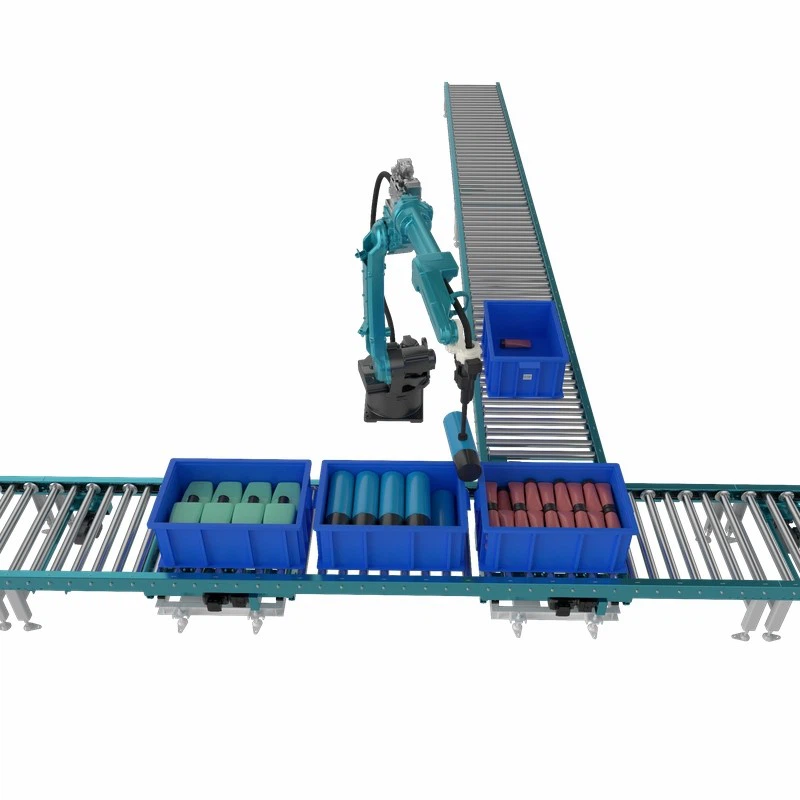

The control systems of Cantilever Robots also play a vital role in precision. Advanced servo motors and controllers are used to regulate the movement of the robot's arms. These controllers can adjust the speed, acceleration, and deceleration of the robot in real - time, ensuring that it moves smoothly and precisely to the desired position. In addition, the use of high - resolution encoders allows the control system to accurately measure the position of the robot's joints, enabling it to make fine adjustments as needed.
Flexibility and Adaptability
Another key factor in ensuring the quality of work is the flexibility and adaptability of Cantilever Robots. These robots can be easily programmed to perform a wide range of tasks. Whether it's a simple pick - and - place operation or a complex assembly process, a Cantilever Robot can be customized to meet the specific requirements of the job.
For instance, in a Picking Robot application, the robot can be programmed to pick up different types of objects with varying shapes, sizes, and weights. The robot's end - effector can be equipped with different grippers or tools depending on the nature of the objects being handled. This adaptability allows the robot to work efficiently in different production environments and with different product lines.
Moreover, Cantilever Robots can be integrated with other manufacturing systems. They can communicate with conveyor belts, sensors, and other equipment to create a seamless production line. This integration enables the robot to work in harmony with other machines, improving overall productivity and ensuring the quality of the final product.
Quality Control through Sensors
Sensors are an essential part of a Cantilever Robot's ability to ensure the quality of work. These robots are often equipped with a variety of sensors, such as vision sensors, force sensors, and proximity sensors.
Vision sensors are particularly important in many applications. They allow the robot to "see" the objects it is working with, enabling it to accurately locate and identify them. In a pick - and - place operation, for example, a vision sensor can detect the position and orientation of an object on a conveyor belt, and the robot can then pick it up with precision. Vision sensors can also be used for quality inspection. The robot can use the vision sensor to check for defects on the surface of an object, such as scratches or cracks, and reject any defective items.
Force sensors are used to measure the amount of force applied by the robot during an operation. This is crucial in applications where delicate objects need to be handled, such as in the electronics industry. The force sensor can ensure that the robot applies the right amount of force when picking up or assembling a component, preventing damage to the object.
Proximity sensors are used to detect the presence of objects in the robot's working area. They can help prevent collisions between the robot and other objects, ensuring the safety of the operation and the quality of the work.
Repeatability and Consistency
Repeatability is a hallmark of Cantilever Robots. Once a robot is programmed to perform a specific task, it can repeat that task with a high degree of accuracy and consistency. This is in contrast to human labor, where factors such as fatigue, distraction, and variability in skill levels can lead to inconsistent results.
In a Palletizing Robot application, for example, the robot can stack products on a pallet in the same way every time. This ensures that the pallets are stable and that the products are properly arranged, reducing the risk of damage during transportation. The repeatability of the robot also means that the quality of the work is consistent over time, which is essential for maintaining customer satisfaction.
Maintenance and Support
To ensure the long - term quality of work, proper maintenance and support are crucial for Cantilever Robots. As a supplier, we provide comprehensive maintenance services to keep the robots in optimal condition. Regular maintenance includes tasks such as lubrication, inspection of components, and calibration of the control system.
We also offer technical support to our customers. Our team of experts is available to answer any questions, troubleshoot problems, and provide training on the operation and programming of the robots. This support ensures that the customers can get the most out of their Cantilever Robots and that the quality of the work is maintained.
Conclusion
In conclusion, a Cantilever Robot ensures the quality of work through a combination of precision engineering, flexibility, sensors, repeatability, and proper maintenance and support. These robots are revolutionizing industries by providing accurate, reliable, and efficient solutions for a wide range of applications.
If you're interested in improving the quality and efficiency of your production process, I encourage you to consider a Cantilever Robot. Our team of experts is ready to work with you to find the best solution for your specific needs. Contact us to start a discussion about how our Cantilever Robots can enhance your operations and take your business to the next level.
References
- Robot Technology: Fundamentals and Applications, John Wiley & Sons
- Industrial Robotics: Theory, Modeling, and Control, Springer