

What are the differences between different brands of palletizing robots?
Jun 16, 2025
Leave a message
As a supplier of palletizing robots, I've had the privilege of working closely with various brands in the industry. Through my experiences, I've come to understand the nuances and differences that set each brand apart. In this blog post, I'll delve into the key disparities between different brands of palletizing robots, offering insights that can help you make an informed decision when choosing the right one for your business.
Performance and Speed
One of the most significant differences between palletizing robot brands lies in their performance and speed capabilities. High - end brands often invest heavily in research and development to optimize the movement algorithms and mechanical design of their robots. This results in robots that can operate at much higher speeds without sacrificing accuracy.
For example, some premium brands can complete up to 1500 palletizing cycles per hour, while more budget - friendly brands may only reach around 800 cycles per hour. The speed of a palletizing robot is crucial for industries with high - volume production requirements. A faster robot can significantly increase the throughput of a production line, reducing bottlenecks and improving overall efficiency.
However, it's important to note that speed isn't the only factor to consider. A robot that moves too quickly may compromise on accuracy, leading to unstable pallets or damaged products. Brands that strike the right balance between speed and precision are often the most sought - after in the market.
Payload Capacity
Payload capacity is another critical aspect that varies among different brands of palletizing robots. Payload refers to the maximum weight that a robot can lift and handle during the palletizing process. Brands offer a wide range of payload capacities to meet the diverse needs of different industries.
Heavy - duty brands are designed to handle large and heavy products, with payload capacities of up to 1000 kilograms or more. These robots are commonly used in industries such as automotive, construction, and large - scale manufacturing. On the other hand, there are brands that specialize in light - duty applications, with payload capacities ranging from 10 to 100 kilograms. These are suitable for industries like food and beverage, electronics, and pharmaceuticals.
When selecting a palletizing robot based on payload capacity, it's essential to consider not only the current weight of your products but also any potential future changes in product specifications. Choosing a robot with a slightly higher payload capacity than your current needs can provide flexibility and ensure long - term usability.
Reach and Working Envelope
The reach and working envelope of a palletizing robot define the area within which the robot can operate. Different brands offer robots with varying reach distances and working envelopes to accommodate different factory layouts and palletizing requirements.
Some brands focus on providing robots with a long reach, which is beneficial for applications where pallets need to be placed at a considerable distance from the robot's base. For example, in large warehouses or distribution centers, a long - reach robot can access multiple pallet locations without the need for repositioning. Other brands may prioritize a larger working envelope, allowing the robot to move in a more complex and three - dimensional space. This is useful for applications that require the robot to handle products from different heights and angles.
It's important to carefully assess your factory's layout and palletizing process to determine the most suitable reach and working envelope for your needs. A robot with an inappropriate reach or working envelope may not be able to perform the required tasks efficiently, leading to wasted space and reduced productivity.
Ease of Programming and Integration
The ease of programming and integration is a factor that can significantly impact the usability and cost - effectiveness of a palletizing robot. Some brands offer user - friendly programming interfaces that allow operators with minimal technical knowledge to program the robot quickly and easily. These interfaces often use graphical programming tools, drag - and - drop functionality, and pre - defined templates, reducing the learning curve and programming time.
In addition to programming, seamless integration with existing factory systems and equipment is also crucial. Brands that provide standardized communication protocols and interfaces make it easier to integrate the robot with conveyor systems, sensors, and other automation equipment. This ensures a smooth and efficient operation of the entire production line.
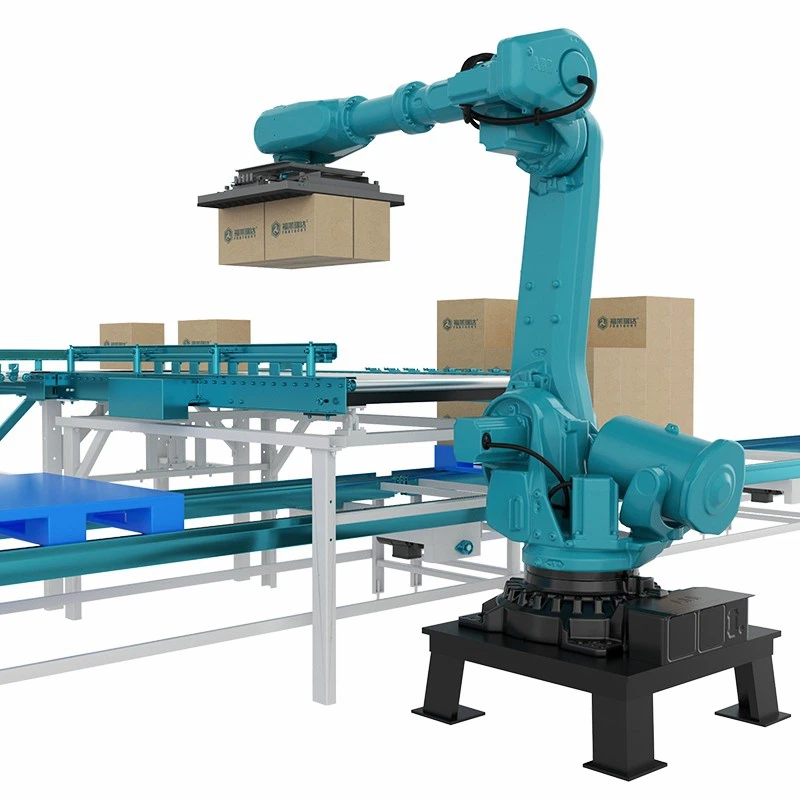

On the other hand, some brands may have more complex programming requirements and limited integration capabilities, which can lead to longer implementation times and higher costs. When choosing a palletizing robot, it's important to consider the level of technical expertise available in your organization and the compatibility of the robot with your existing systems.
Reliability and Maintenance
Reliability and maintenance are key considerations when investing in a palletizing robot. Different brands have different reputations for reliability, which is often reflected in the robot's uptime and mean time between failures (MTBF). High - quality brands typically use high - grade components and rigorous quality control processes during manufacturing, resulting in robots that are more reliable and less prone to breakdowns.
Maintenance requirements also vary among brands. Some brands offer robots with self - diagnostic capabilities, which can detect potential problems before they cause a breakdown. These robots can also provide real - time data on their performance and health, allowing for proactive maintenance. Other brands may require more frequent manual inspections and maintenance, which can increase downtime and maintenance costs.
When evaluating different brands, it's important to consider the long - term reliability and maintenance costs of the robot. A more reliable robot may have a higher upfront cost but can save you money in the long run by reducing downtime and maintenance expenses.
Cost
Cost is, of course, a major factor when choosing a palletizing robot. Different brands offer robots at different price points, depending on their features, performance, and brand reputation. Premium brands with advanced features, high performance, and a strong brand image often come with a higher price tag. These robots are typically targeted at large - scale manufacturers and industries with high - end requirements.
On the other hand, budget - friendly brands may offer more basic models at a lower cost. These robots can be a good option for small and medium - sized enterprises or businesses with less demanding palletizing requirements. However, it's important to be cautious when choosing a low - cost robot, as it may lack some of the features and reliability of more expensive models.
When comparing the costs of different brands, it's important to consider the total cost of ownership, which includes not only the purchase price but also installation costs, programming costs, maintenance costs, and energy consumption. A seemingly inexpensive robot may end up being more expensive in the long run if it has high maintenance requirements or low energy efficiency.
Customer Support and Service
Customer support and service are often overlooked but are crucial factors when choosing a palletizing robot brand. A brand that offers excellent customer support can provide timely assistance in case of technical problems, maintenance issues, or programming challenges. This can minimize downtime and ensure the smooth operation of your production line.
Some brands have a global network of service centers and technicians, which means that help is always available, no matter where your factory is located. These brands also offer training programs for operators and maintenance staff, ensuring that they have the skills and knowledge to operate and maintain the robot effectively.
In contrast, some brands may have limited customer support options, which can lead to long wait times for assistance and increased downtime. When selecting a brand, it's important to research their customer support reputation and the availability of service in your area.
Conclusion
In conclusion, there are several key differences between different brands of palletizing robots, including performance and speed, payload capacity, reach and working envelope, ease of programming and integration, reliability and maintenance, cost, and customer support and service. As a [your position] at a [your brand] palletizing robot supplier, I understand the importance of choosing the right robot for your business. Each brand has its own strengths and weaknesses, and it's essential to carefully evaluate your specific needs and requirements before making a decision.
If you're interested in learning more about our Palletizing Robot offerings or have any questions about which robot is best for your application, we encourage you to reach out to us. Our team of experts is ready to assist you in finding the perfect palletizing solution for your business. Whether you need a Cantilever Robot for a specific application or a Picking Robot to complement your palletizing process, we have the knowledge and experience to guide you through the selection process. Contact us today to start a conversation about how we can help you improve your palletizing efficiency and productivity.
References
- Robotics Industry Association (RIA). "Guidelines for Palletizing Robot Selection."
- International Federation of Robotics (IFR). "World Robotics Report."
- Industry trade journals and publications related to robotics and automation.