

What are the disadvantages of a swing arm robot?
Jun 10, 2025
Leave a message
Hey there! I'm a supplier of swing arm robots, and I know these machines inside out. While swing arm robots have plenty of cool features and can be super useful in a bunch of industries, they're not without their downsides. In this blog, I'm gonna spill the beans on some of the disadvantages of swing arm robots.
Limited Reach
One of the biggest drawbacks of swing arm robots is their limited reach. You see, these robots have a fixed range of motion based on the length of their arms and the design of their joints. It's like having a really long - handled tool, but there are still places it just can't reach.
Let's say you're using a swing arm robot in a large - scale manufacturing plant. If you need to pick up parts from different corners of a big workspace, the robot might struggle. It can only operate within its pre - defined arc of movement. Unlike some other types of robots, like gantry robots that can move freely along multiple axes over a large area, swing arm robots are restricted. This limited reach can be a real pain in the neck when you're trying to optimize your production line and need to access parts or perform tasks across a wide space.
Complex Programming
Programming a swing arm robot is no walk in the park. These robots have multiple joints and axes of movement, which means the programming required to make them perform specific tasks is quite complex. You have to take into account things like the angle of each joint, the speed of movement, and the sequence of operations.

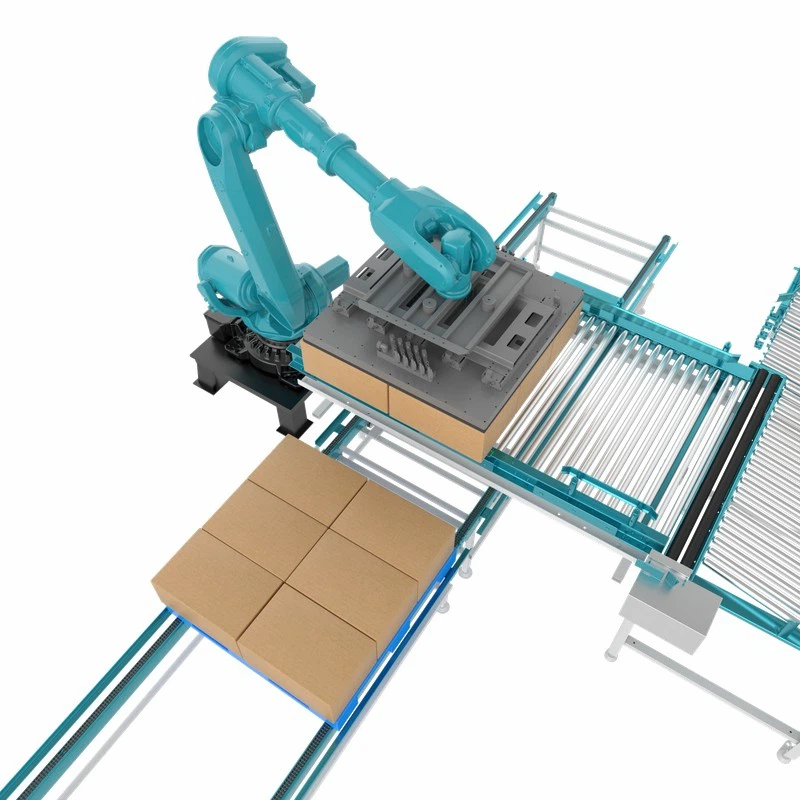
Imagine you want the robot to pick up a part from one location, rotate it, and then place it in another spot. You'll need to write a program that precisely controls each step of this process. For someone who isn't well - versed in robotics programming, this can be extremely challenging. And even for experienced programmers, it can take a lot of time to develop, test, and fine - tune the programs. This complexity not only slows down the implementation of new tasks but also increases the risk of errors in the programming, which can lead to malfunctions and production delays.
High Initial Cost
Investing in a swing arm robot can put a serious dent in your wallet. The initial cost of purchasing a swing arm robot is quite high. You're not just paying for the mechanical parts; you're also shelling out for the sophisticated control systems, sensors, and software that make the robot work.
On top of that, there are additional costs associated with installation. You might need to modify your workspace to accommodate the robot, which could involve things like building a special platform or adding safety features. And don't forget about training your staff to operate and maintain the robot. All these expenses add up, making it a significant investment for many businesses, especially small and medium - sized enterprises. It's a big commitment, and if you're not careful, you could end up spending a lot of money without getting the expected return on investment.
Maintenance Challenges
Keeping a swing arm robot in good working condition can be a real headache. These robots have a lot of moving parts, and over time, these parts can wear out. The joints, gears, and motors all require regular maintenance to ensure smooth operation.
Finding replacement parts can also be a challenge. Since swing arm robots are often highly specialized, the parts might not be readily available off - the - shelf. You may have to order them from the manufacturer, which can take time and increase downtime. And when it comes to maintenance, you need technicians with specialized skills. Not just anyone can work on these robots. You need people who understand the complex mechanical and electrical systems, which can be difficult to find and expensive to hire.
Limited Flexibility
Swing arm robots are designed for specific tasks. Once they're programmed for a particular job, it can be difficult to repurpose them for something else. For example, if you initially set up the robot to assemble a specific product, and then you want to change your production line to make a different product, you might run into problems.
The robot's physical design and programming may not be easily adaptable to the new requirements. It's not like a human worker who can quickly adjust to different tasks. You may need to completely reprogram the robot, which, as we've already discussed, is a complex and time - consuming process. And in some cases, you might even need to make physical modifications to the robot, which can be costly and time - consuming. This lack of flexibility can be a major disadvantage in today's fast - changing manufacturing environment, where companies need to be able to quickly adapt to new market demands.
Safety Concerns
Safety is always a top priority when it comes to using robots in the workplace. Swing arm robots, with their fast - moving parts and powerful motors, pose some safety risks. If a worker accidentally gets in the way of the robot's movement, it could cause serious injury.
To mitigate these risks, you need to install safety features like sensors and barriers. However, these safety features add to the cost and complexity of the system. And even with these safety measures in place, there's always a small chance of a malfunction. For example, a sensor could fail, or a barrier could be bypassed. This means that you need to constantly monitor the robot's operation and ensure that all safety protocols are being followed, which can be a hassle for the workers and the management.
Lack of Adaptability to Unstructured Environments
Swing arm robots are best suited for structured environments where the tasks and the objects they interact with are well - defined. In an unstructured environment, such as a natural disaster area or a cluttered warehouse, these robots struggle.
They rely on pre - programmed paths and sensors to detect objects. In an unstructured environment, the objects may be in random positions, and there may be unexpected obstacles. The robot's sensors may not be able to accurately detect these objects, and its pre - programmed paths may no longer be valid. This lack of adaptability limits the use of swing arm robots in situations where flexibility and the ability to handle unexpected situations are crucial.
Comparison with Other Robots
When you compare swing arm robots with other types of robots, their disadvantages become even more apparent. For instance, Picking Robot are often more flexible in terms of picking up objects from different locations. They can be designed to have a wider range of motion and can be easily programmed to pick up different types of objects.
3D Vision Robot use advanced 3D vision technology to better understand their environment. They can detect objects in three dimensions, which allows them to perform more complex tasks and adapt to different situations more easily.
And Palletizing Robot are specifically designed for palletizing tasks. They can handle heavy loads and are often more efficient at stacking products on pallets compared to swing arm robots.
Conclusion
Despite these disadvantages, swing arm robots still have their place in the market. They can be very effective for certain types of tasks in a structured environment. But it's important to be aware of their limitations before making a decision to invest in them.
If you're considering purchasing a swing arm robot for your business, I'd be more than happy to have a chat with you. We can discuss your specific needs and see if a swing arm robot is the right fit for your operation. Whether you're in manufacturing, warehousing, or any other industry, I can help you understand how these robots can work for you and how to overcome some of the challenges I've mentioned. So, don't hesitate to reach out and start a conversation about your potential swing arm robot purchase.
References
- Robotics Industry Association. "Best Practices for Robot Safety in the Workplace."
- Journal of Manufacturing Technology Management. "Challenges in Robot Programming and Adaptability."
- International Journal of Advanced Manufacturing Technology. "Analysis of the Cost - Benefit of Swing Arm Robots in Manufacturing."