

What are the topologies of a network system?
Jul 22, 2025
Leave a message
In the realm of network systems, understanding the different topologies is fundamental for system suppliers like us. Network topologies define how various nodes - such as computers, servers, and other devices - are interconnected within a network. Each topology has its own unique characteristics, advantages, and limitations, which play a crucial role in determining the performance, reliability, and cost - effectiveness of a network.
Bus Topology
The bus topology is one of the simplest and earliest network topologies. In a bus topology, all devices are connected to a single communication line, known as the bus. This shared communication medium allows data to be transmitted between devices. When a device wants to send data, it broadcasts the data onto the bus, and all other devices on the network receive the data. However, only the device with the matching address processes the data.
One of the main advantages of the bus topology is its simplicity and low cost. Since it requires only a single cable, the installation and maintenance costs are relatively low. This makes it an attractive option for small - scale networks. However, it also has several limitations. If the main bus cable fails, the entire network goes down. Additionally, as more devices are added to the network, the performance can degrade significantly due to increased collisions and traffic on the shared medium.
Ring Topology
In a ring topology, each device is connected to exactly two other devices, forming a closed loop or ring. Data is transmitted in one direction around the ring, from one device to the next. Each device acts as a repeater, regenerating the signal and passing it along to the next device in the ring.
The ring topology offers a high level of reliability because data transmission is well - defined and predictable. Since data travels in a single direction, there are fewer chances of collisions compared to a bus topology. However, a major drawback of the ring topology is that if one device fails, the entire network can be disrupted. This is because the break in the ring prevents the data from circulating properly.
Star Topology
The star topology is one of the most common network topologies in modern networks. In a star topology, all devices are connected to a central hub or switch. The central device manages the flow of data between the connected devices. When a device wants to send data to another device, it sends the data to the central hub, which then forwards the data to the appropriate destination.
One of the key advantages of the star topology is its reliability. If one device fails, it does not affect the rest of the network. Only the connection between the failed device and the central hub is disrupted. Additionally, it is easy to add or remove devices from the network without affecting the overall network operation. However, the central hub is a single point of failure. If the hub fails, the entire network goes down.
Mesh Topology
A mesh topology is a highly interconnected network where every device is connected to every other device. There are two types of mesh topologies: full - mesh and partial - mesh. In a full - mesh topology, each device has a direct connection to every other device in the network. In a partial - mesh topology, only some devices are fully connected, while others are connected to a subset of the devices.
The mesh topology offers the highest level of reliability and redundancy. Since there are multiple paths for data transmission, if one link fails, data can be rerouted through another path. This makes it suitable for critical networks where high availability is required. However, it is also the most expensive and complex topology to implement. The number of connections increases significantly with the number of devices, which leads to higher installation and maintenance costs.
Tree Topology
The tree topology is a combination of the bus and star topologies. It consists of multiple star - connected networks that are connected to a common bus. The tree topology allows for hierarchical organization of devices, making it suitable for large - scale networks.
One of the advantages of the tree topology is its scalability. It is easy to add new branches or sub - networks to the existing network. However, similar to the bus topology, if the main bus fails, the entire network can be affected.

Hybrid Topology
As the name suggests, a hybrid topology is a combination of two or more different topologies. For example, a network might use a star - ring hybrid topology, where multiple star - connected networks are connected in a ring. Hybrid topologies are designed to take advantage of the strengths of different topologies while minimizing their weaknesses.
At our company, we understand the importance of choosing the right network topology for our clients. Depending on their specific requirements, such as network size, performance, reliability, and budget, we can recommend the most suitable topology. We also offer a range of advanced systems to optimize network performance.
Our Path Optimization Algorithm System is designed to find the most efficient paths for data transmission in a network. It takes into account factors such as network congestion, link reliability, and bandwidth availability to ensure that data is transmitted quickly and reliably.
The Point Cloud Algorithm System is another innovative solution we offer. It is used for processing and analyzing point cloud data, which is becoming increasingly important in applications such as 3D modeling, robotics, and autonomous vehicles.
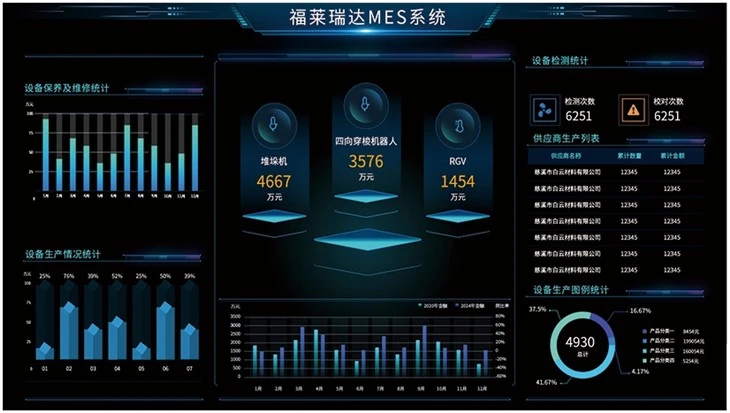
For manufacturing clients, our Manufacturing Execution System provides real - time monitoring and control of manufacturing processes. It helps to improve productivity, quality, and efficiency in the manufacturing environment.
If you are looking for a reliable system supplier for your network infrastructure, we are here to help. Our team of experts has extensive experience in designing and implementing network systems with different topologies. We can work closely with you to understand your specific needs and provide customized solutions. Whether you are a small business looking for a simple network or a large enterprise requiring a complex, high - performance network, we have the expertise and technology to meet your requirements.
Contact us today to start a discussion about your network system needs and explore how our solutions can benefit your organization. We are eager to engage in procurement discussions and help you build a robust and efficient network system.
References
- Andrew S. Tanenbaum, "Computer Networks", Fourth Edition
- Douglas E. Comer, "Computer Networks and the Internet", Fifth Edition