

What is computer vision in robots?
Nov 06, 2025
Leave a message
Hey there! As a robot supplier, I'm super stoked to chat with you about computer vision in robots. It's a game - changer in the robotics world, and I can't wait to break it all down for you.
So, what exactly is computer vision in robots? Well, think of it as giving robots the ability to "see" and understand the world around them, just like we humans do. It involves using cameras, sensors, and advanced algorithms to process visual information. This allows robots to identify objects, determine their position and orientation, and even make decisions based on what they "see".
Let's start with the basics. The camera is like the robot's eye. It captures images and videos of the environment. But just capturing the visuals isn't enough. That's where the sensors come in. They can measure things like distance, depth, and light intensity. For example, a depth sensor can help the robot figure out how far away an object is.
Once the robot has all this visual data, it needs to make sense of it. That's the job of the algorithms. These algorithms analyze the images and videos, looking for patterns, shapes, and colors. They can identify different objects, distinguish between them, and even recognize specific features. For instance, a robot in a warehouse might use computer vision to identify different types of boxes based on their size, shape, and label.
Now, let's talk about some of the cool applications of computer vision in robots. One of the most common areas is industrial automation. In manufacturing plants, robots equipped with computer vision can perform tasks like quality control. They can inspect products for defects, measure dimensions, and ensure that everything meets the required standards. This not only improves the quality of the products but also increases efficiency and reduces human error.
Another great application is in logistics and warehousing. Robots with computer vision can navigate through the warehouse, pick and place items on shelves, and even sort packages. They can find the shortest path to a particular location, avoid obstacles, and work 24/7 without getting tired. This makes the whole logistics process much faster and more cost - effective.
In the field of agriculture, computer vision in robots is also making a big impact. Robots can be used to monitor crops, detect diseases and pests, and even perform precision spraying. They can analyze the health of the plants by looking at their color, shape, and texture, and then take appropriate actions. This helps farmers increase their yields and reduce the use of pesticides.
At our company, we offer a range of robots that utilize computer vision technology. Take our 3D Vision Robot for example. This bad boy is equipped with state - of the - art 3D vision sensors that allow it to accurately perceive the three - dimensional world. It can handle complex tasks like bin picking, where it needs to pick up objects from a bin full of randomly arranged items. With its advanced computer vision algorithms, it can quickly identify the objects, determine their position and orientation, and then pick them up with precision.
Our Swing Arm Robot is another great option. It's a versatile robot that can be used in a variety of applications, from assembly to packaging. The computer vision system on this robot helps it to accurately position itself and the objects it's working with. It can adapt to different workpieces and environments, making it a very flexible choice for manufacturers.
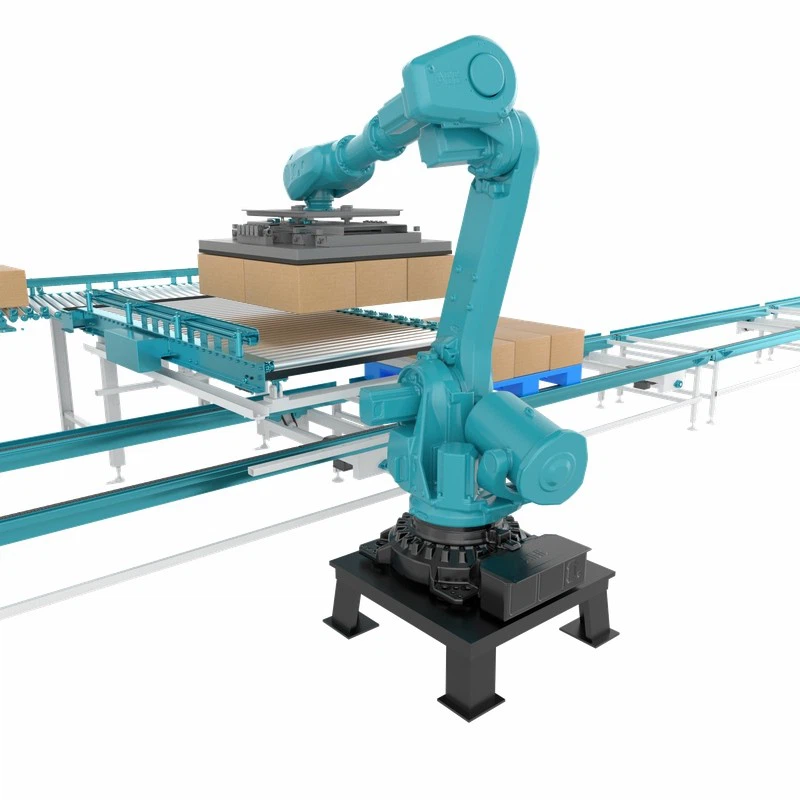
And then there's our Palletizing Robot. This robot is designed to stack and unstack pallets efficiently. The computer vision technology allows it to identify the pallets, the products on them, and the best way to stack them. It can work in a dynamic environment, adjusting to changes in the layout and the types of products being handled.
One of the key benefits of using robots with computer vision is the flexibility they offer. Unlike traditional robots that are programmed to perform a specific task in a fixed way, robots with computer vision can adapt to different situations. They can learn from their experiences, adjust their behavior based on the visual input, and perform tasks in a more intelligent manner.
However, implementing computer vision in robots isn't without its challenges. One of the main issues is the complexity of the algorithms. Developing and training these algorithms requires a lot of data and computational power. There's also the problem of lighting conditions. Different lighting can affect the quality of the images captured by the cameras, which in turn can impact the performance of the computer vision system.
But don't worry, at our company, we've got the expertise to overcome these challenges. Our team of engineers and researchers is constantly working on improving the computer vision technology in our robots. We use the latest machine learning and deep learning techniques to train our algorithms, and we've developed advanced calibration methods to deal with lighting issues.
If you're in the market for robots with computer vision, we'd love to have a chat with you. Whether you're a small business looking to automate a single process or a large corporation in need of a complete robotic solution, we can help. Our robots are designed to be easy to integrate into your existing systems, and we offer comprehensive support and training to ensure that you get the most out of your investment.
So, if you're interested in learning more about how our robots with computer vision can benefit your business, don't hesitate to reach out. We're here to answer all your questions, provide you with detailed information, and even arrange a demonstration. Let's work together to take your business to the next level with the power of computer vision in robots.

References
- "Computer Vision: Algorithms and Applications" by Richard Szeliski
- "Robotics: Modelling, Planning and Control" by Bruno Siciliano et al.
- Various industry reports on robotics and automation