

What is the depth accuracy of a 3D vision robot?
Nov 14, 2025
Leave a message
What is the Depth Accuracy of a 3D Vision Robot?
In the rapidly evolving landscape of industrial automation, 3D vision robots have emerged as a game - changer. As a leading 3D Vision Robot supplier, I've witnessed firsthand the transformative impact these robots have on various industries. One of the most critical aspects of a 3D vision robot is its depth accuracy. In this blog, we'll delve into what depth accuracy means, why it matters, and how it affects the performance of 3D vision robots in real - world applications.
Understanding Depth Accuracy
Depth accuracy refers to the precision with which a 3D vision robot can measure the distance between itself and an object in the three - dimensional space. It is typically expressed in units such as millimeters or micrometers. A high - depth accuracy means that the robot can accurately determine the position of an object in the Z - axis (the depth dimension), in addition to its X and Y coordinates.
To achieve depth accuracy, 3D vision robots use a variety of technologies. Stereo vision systems, for example, work by capturing images of an object from two different viewpoints, similar to how human eyes perceive depth. By analyzing the differences between the two images, the robot can calculate the distance to the object. Another common technology is Time - of - Flight (ToF), which measures the time it takes for a light signal to travel from the robot to the object and back.

Why Depth Accuracy Matters
The importance of depth accuracy cannot be overstated, especially in applications where precise object manipulation is required.
In the field of Picking Robot applications, high depth accuracy is crucial for accurate grasping. When a robot is tasked with picking up objects from a bin or conveyor belt, it needs to know exactly how far away the object is to position its gripper correctly. If the depth measurement is inaccurate, the robot may either miss the object or apply too much force while grasping it, leading to damage.
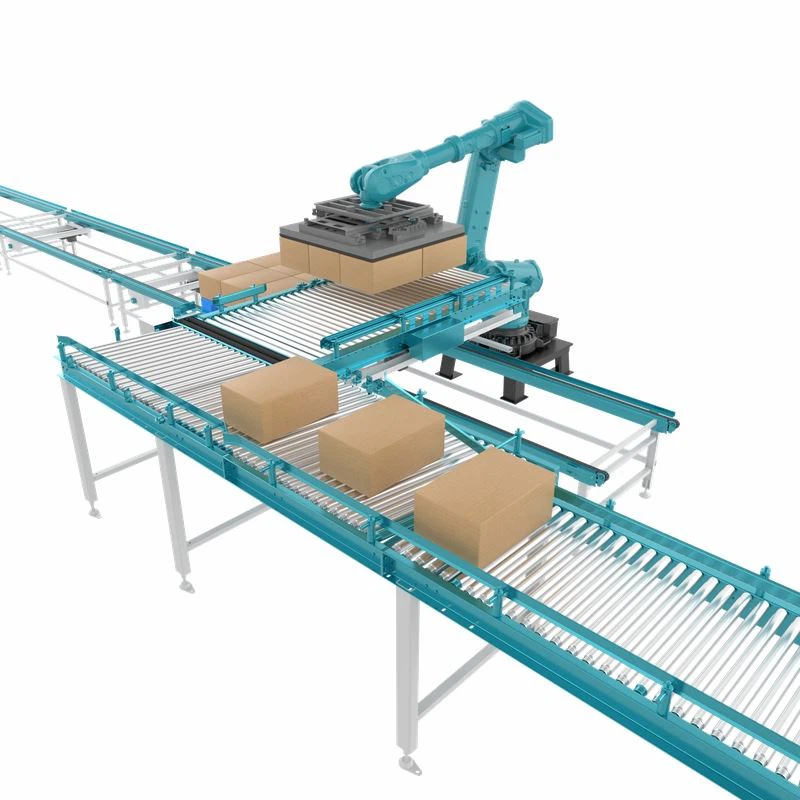
For Palletizing Robot operations, depth accuracy ensures that products are stacked neatly and securely on pallets. The robot needs to accurately measure the height of each layer of products to place the next layer at the correct position. Without accurate depth measurement, the pallet may become unstable, increasing the risk of product damage during transportation.
In Cantilever Robot applications, which often involve tasks such as welding or painting, depth accuracy enables the robot to maintain a consistent distance from the workpiece. This is essential for achieving high - quality results, as variations in distance can affect the quality of the weld or the thickness of the paint layer.
Factors Affecting Depth Accuracy
Several factors can influence the depth accuracy of a 3D vision robot.
Environmental Conditions: Lighting conditions play a significant role in depth measurement. Poor lighting can cause reflections or shadows, which can interfere with the robot's ability to accurately capture images or measure the time of flight of light signals. Additionally, dust, smoke, or humidity in the environment can also affect the performance of the 3D vision system.
Object Characteristics: The surface properties of the object being measured can impact depth accuracy. Shiny or reflective objects can cause light to scatter, making it difficult for the robot to obtain clear images or accurate time - of - flight measurements. Similarly, objects with complex shapes or textures may pose challenges for the 3D vision system.
System Calibration: Proper calibration of the 3D vision system is essential for achieving high depth accuracy. Over time, factors such as temperature changes and mechanical vibrations can cause the system to become misaligned. Regular calibration ensures that the system is accurately calibrated and can provide reliable depth measurements.
Measuring and Improving Depth Accuracy
To measure the depth accuracy of a 3D vision robot, several methods can be used. One common approach is to use a calibration target with known dimensions. The robot measures the distance to the target, and the measured values are compared with the known values to calculate the accuracy.
Improving depth accuracy often involves a combination of hardware and software enhancements. On the hardware side, using high - quality sensors and cameras can significantly improve the accuracy of depth measurement. Additionally, advanced optical filters can be used to reduce the impact of environmental factors such as reflections and background light.
On the software side, sophisticated algorithms can be developed to process the data captured by the sensors more accurately. These algorithms can compensate for factors such as noise, distortion, and object surface properties to improve the overall depth accuracy.
Real - World Applications and Case Studies
Let's take a look at some real - world applications where depth accuracy of 3D vision robots has made a significant difference.
In an e - commerce fulfillment center, a picking robot with high - depth accuracy was able to increase the picking efficiency by 30%. The robot was able to accurately grasp a wide variety of products, regardless of their shape and size, reducing the number of failed picks and improving the overall throughput of the system.
In an automotive manufacturing plant, a palletizing robot with precise depth measurement capabilities was used to stack engine components on pallets. The accurate depth measurement ensured that the components were stacked securely, reducing the risk of damage during transportation and storage.
Conclusion
Depth accuracy is a critical factor in the performance of 3D vision robots. As a 3D Vision Robot supplier, we understand the importance of providing robots with high - depth accuracy to meet the needs of our customers. Whether it's for picking, palletizing, or other industrial applications, accurate depth measurement enables robots to perform tasks with precision and efficiency.
If you're looking for a reliable 3D vision robot solution for your business, we'd love to hear from you. Our team of experts can work with you to understand your specific requirements and provide you with a customized solution that meets your needs. Contact us today to start the conversation about how our 3D vision robots can transform your operations.
References
- "3D Vision in Robotics: Technology and Applications" - Springer
- "Industrial Robotics: Theory, Modelling and Control" - Wiley
- Research papers on 3D vision systems and depth measurement algorithms from IEEE Xplore and ACM Digital Library.