

What is the load capacity of a belt conveyor?
Jul 01, 2025
Leave a message
Hey there! I'm a supplier of belt conveyors, and I often get asked about the load capacity of these nifty machines. So, I thought I'd take a deep dive into this topic and share everything you need to know.
Let's start with the basics. The load capacity of a belt conveyor refers to the maximum amount of weight or volume that the conveyor can handle safely and efficiently. It's a crucial factor to consider when you're planning to use a belt conveyor for your business, whether you're in mining, manufacturing, food processing, or any other industry that relies on moving materials from one place to another.
Factors Affecting Load Capacity
There are several factors that can influence the load capacity of a belt conveyor. First up is the belt itself. The type, width, and strength of the belt play a significant role. For example, a wider belt can generally carry more weight than a narrow one. Also, belts made from high - strength materials can handle heavier loads. If you're dealing with abrasive materials, you'll need a belt that's resistant to wear and tear to maintain its load - carrying capacity over time.
The design of the conveyor frame is another important factor. A sturdy frame can support the weight of the materials on the belt and prevent sagging or structural failures. The spacing and size of the rollers or idlers also matter. Properly spaced and sized idlers help distribute the load evenly across the belt, reducing stress and increasing the overall load capacity.
The speed of the conveyor is also a consideration. Faster conveyor speeds can sometimes reduce the load capacity because there's less time for the belt to support the weight of the materials. On the other hand, if the conveyor is moving too slowly, it might not be cost - effective for high - volume operations.
The type of material being conveyed is a biggie. Different materials have different densities and flow characteristics. For instance, a conveyor carrying light, fluffy materials like sawdust will have a different load capacity compared to one carrying heavy, dense materials like metal ores.
Calculating Load Capacity
Calculating the load capacity of a belt conveyor isn't always a straightforward process. There are some general formulas and guidelines, but they often need to be adjusted based on the specific conditions of your application.
One common way to estimate the load capacity is to consider the cross - sectional area of the material on the belt. You multiply the cross - sectional area (in square feet or square meters) by the belt speed (in feet per minute or meters per second) and the density of the material (in pounds per cubic foot or kilograms per cubic meter).
However, this is a simplified approach. In real - world scenarios, you also need to account for factors like the angle of the conveyor (if it's inclined or declined), the friction between the belt and the rollers, and any additional forces acting on the belt, such as acceleration or deceleration.
Real - World Examples
Let's look at a couple of real - world examples to better understand load capacity. Suppose you're in a food processing plant, and you're using a belt conveyor to move boxes of cereal. The boxes are relatively light, and the conveyor doesn't need to be very wide or have a super - strong belt. You can probably get away with a smaller, less expensive conveyor with a relatively low load capacity.
On the other hand, if you're in a mining operation, you'll be dealing with large chunks of ore that are extremely heavy. You'll need a heavy - duty belt conveyor with a wide belt, a robust frame, and high - strength idlers. The load capacity of this conveyor will need to be much higher to handle the large volume and weight of the materials.
Choosing the Right Belt Conveyor for Your Load
As a belt conveyor supplier, I know how important it is to choose the right conveyor for your specific load requirements. If you choose a conveyor with a load capacity that's too low, you'll run into problems like belt breakage, conveyor jams, and reduced productivity. On the other hand, if you choose a conveyor with a load capacity that's way too high, you'll end up spending more money than necessary on equipment that's overkill for your needs.
When you're in the market for a belt conveyor, it's a good idea to work closely with a supplier who can help you assess your load requirements accurately. We can take into account all the factors I've mentioned above and recommend the best conveyor for your application.
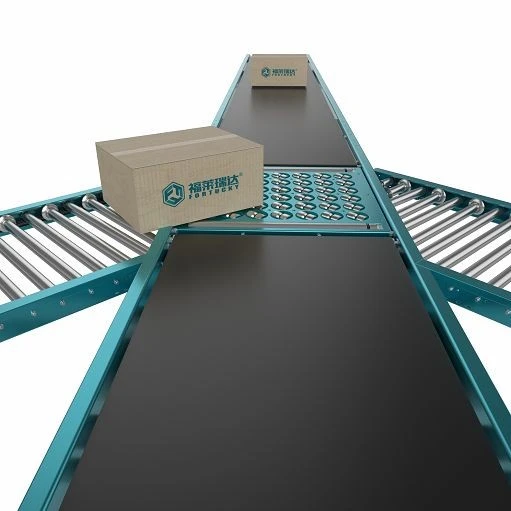

Related Conveyor Systems
If you're interested in other types of conveyor systems, we also offer Chain Conveyor, High - speed Sorter, and Plate Chain Conveyor. These systems have their own unique load - handling capabilities and are suitable for different types of applications.
Wrapping Up and Reaching Out
In conclusion, understanding the load capacity of a belt conveyor is essential for making the right investment in your material - handling equipment. Whether you're a small business owner or part of a large corporation, getting the load capacity right can save you time, money, and headaches in the long run.
If you're looking for a belt conveyor or have questions about load capacity, don't hesitate to reach out. We're here to help you find the perfect conveyor solution for your needs. Let's talk about your project and see how we can make your material - handling process more efficient.
References
- "Belt Conveyor Design Manual" by Conveyor Equipment Manufacturers Association
- "Materials Handling Handbook" by the Material Handling Institute of America