

Can rail guided vehicles be used in areas with high electromagnetic fields?
Nov 04, 2025
Leave a message
As a supplier of rail guided vehicles (RGVs), I often encounter inquiries about the applicability of our products in various environments. One question that frequently arises is whether RGVs can be used in areas with high electromagnetic fields. In this blog post, I will delve into this topic, exploring the potential challenges and solutions related to using RGVs in such conditions.
Understanding Rail Guided Vehicles
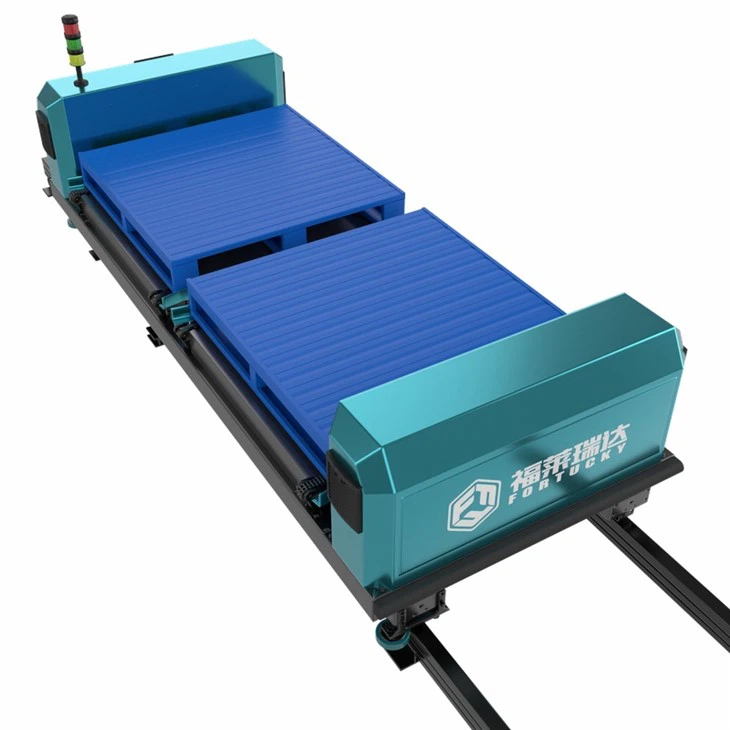
Before discussing the impact of high electromagnetic fields on RGVs, it's essential to understand what RGVs are and how they operate. RGVs are automated vehicles that run on rails, typically used in industrial settings for material handling, transportation, and storage. They offer several advantages, including high precision, reliability, and the ability to handle heavy loads. Our company offers a range of RGVs, such as the Heavy-duty Rail Guided Vehicle, Clamp-type Rail Guided Vehicle, and Double Station Rail Guided Vehicle, each designed to meet specific industrial needs.
The Impact of High Electromagnetic Fields on RGVs
High electromagnetic fields can pose several challenges to the operation of RGVs. These fields can interfere with the electronic components of the vehicle, including sensors, controllers, and communication systems. The interference can lead to inaccurate sensor readings, erratic control behavior, and communication failures, which can compromise the safety and efficiency of the RGV.
Sensor Interference
RGVs rely on various sensors, such as proximity sensors, laser scanners, and encoders, to navigate and interact with their environment. High electromagnetic fields can cause these sensors to produce false readings or malfunction altogether. For example, a proximity sensor may detect an object when there is none, or an encoder may provide inaccurate position information, leading to collisions or misalignment of the RGV.
Controller Malfunction
The controller is the brain of the RGV, responsible for processing sensor data, making decisions, and controlling the vehicle's movement. Electromagnetic interference can disrupt the normal operation of the controller, causing it to execute incorrect commands or even crash. This can result in the RGV moving erratically, stopping unexpectedly, or failing to respond to operator commands.
Communication Failure
RGVs often communicate with other devices, such as warehouse management systems, conveyors, and other RGVs, to coordinate their operations. High electromagnetic fields can interfere with the communication signals, leading to data loss, delays, or complete communication breakdown. This can disrupt the overall workflow and cause inefficiencies in the material handling process.
Solutions to Mitigate the Impact of High Electromagnetic Fields
Despite the challenges posed by high electromagnetic fields, there are several solutions available to mitigate their impact on RGVs. These solutions involve both hardware and software measures to protect the electronic components of the vehicle from electromagnetic interference.
Shielding
One of the most effective ways to protect RGVs from electromagnetic interference is to use shielding materials. Shielding can be applied to the electronic components, cables, and enclosures of the vehicle to block or reduce the penetration of electromagnetic fields. For example, metal enclosures can be used to shield the controller and sensors, while shielded cables can be used to transmit signals without interference.
Filtering
Filtering is another technique used to reduce electromagnetic interference. Filters can be installed in the power supply and signal lines of the RGV to remove unwanted electromagnetic noise. These filters can be passive or active, depending on the specific requirements of the application. Passive filters, such as capacitors and inductors, are simple and cost-effective, while active filters can provide more precise filtering and better performance.
Electromagnetic Compatibility (EMC) Design
During the design phase of the RGV, electromagnetic compatibility (EMC) principles should be considered to ensure that the vehicle can operate reliably in high electromagnetic environments. This involves proper layout and grounding of the electronic components, as well as the use of EMC-compliant components and materials. By following EMC design guidelines, the susceptibility of the RGV to electromagnetic interference can be minimized.

Software Compensation
In addition to hardware measures, software compensation techniques can also be used to mitigate the impact of electromagnetic interference. For example, sensor data can be filtered and processed using algorithms to remove noise and correct for errors. The controller can also be programmed to detect and compensate for electromagnetic interference, ensuring the stable and reliable operation of the RGV.
Case Studies
To illustrate the effectiveness of these solutions, let's look at some real-world case studies. In a large manufacturing plant, RGVs were used to transport heavy materials between different production areas. The plant had high electromagnetic fields due to the presence of large motors and welding equipment. Initially, the RGVs experienced frequent sensor malfunctions and communication failures, which affected the productivity of the plant.
To address these issues, the RGVs were retrofitted with shielding enclosures for the sensors and controllers, and shielded cables were used for signal transmission. In addition, filtering circuits were installed in the power supply lines to reduce electromagnetic noise. The software of the RGVs was also updated to include sensor data filtering and compensation algorithms. After these modifications, the RGVs were able to operate reliably in the high electromagnetic environment, and the productivity of the plant increased significantly.
Conclusion
In conclusion, while high electromagnetic fields can pose challenges to the operation of RGVs, these challenges can be overcome with the right solutions. By using shielding, filtering, EMC design, and software compensation techniques, RGVs can be made to operate reliably in high electromagnetic environments. As a supplier of RGVs, we are committed to providing our customers with high-quality products that can meet their specific industrial needs, even in challenging environments.
If you are interested in learning more about our RGVs or have any questions about their applicability in high electromagnetic fields, please feel free to contact us. Our team of experts will be happy to assist you in finding the best solution for your material handling needs.
References
- Electromagnetic Compatibility Engineering, Henry W. Ott
- Industrial Automation and Control Systems: A Guide to Electromagnetic Compatibility, International Electrotechnical Commission