

What are the traffic - management benefits of continuous elevators?
Dec 15, 2025
Leave a message
As a continuous elevator supplier, I've witnessed firsthand how this innovative technology can transform traffic management in various settings. In this blog post, I'll explore the significant traffic - management benefits of continuous elevators and explain why they are a game - changer in the industry.
High - Efficiency Vertical Transportation
One of the most prominent traffic - management benefits of continuous elevators is their ability to offer high - efficiency vertical transportation. Unlike traditional Reciprocating Elevator systems that move up and down in a stop - and - go manner, continuous elevators operate continuously. This means that there are no long waiting times for passengers.
In high - rise buildings with a large number of occupants, such as commercial skyscrapers or residential towers, traditional elevators often become a bottleneck during peak hours. The time spent waiting for the elevator to arrive, loading, and unloading passengers can be extremely frustrating and time - consuming. Continuous elevators, on the other hand, eliminate this problem. They can carry passengers in a seamless flow, similar to an escalator but in a vertical plane.
For example, in a large office building where hundreds of employees arrive at work simultaneously in the morning, a continuous elevator system can quickly and efficiently transport them to their respective floors. This reduces congestion in the lobby area and ensures that employees can reach their workstations on time, improving overall productivity.
Increased Capacity
Continuous elevators have a much higher capacity compared to traditional elevator systems. The continuous movement allows for a greater number of passengers or goods to be transported within a given period. This is particularly beneficial in buildings with high footfall, such as shopping malls, airports, and convention centers.
In a shopping mall, large crowds of shoppers may need to move between different floors throughout the day. A continuous elevator can handle a large volume of people, ensuring that there are no long queues at the elevator banks. This improves the shopping experience for customers, as they can move freely between floors and access different stores without delay.
In airports, continuous elevators can be used to transport passengers between terminals, different levels of the airport, or to the gates. With the ever - increasing number of air travelers, high - capacity continuous elevators can ensure smooth passenger flow and reduce congestion in critical areas of the airport.
Flexibility in Design
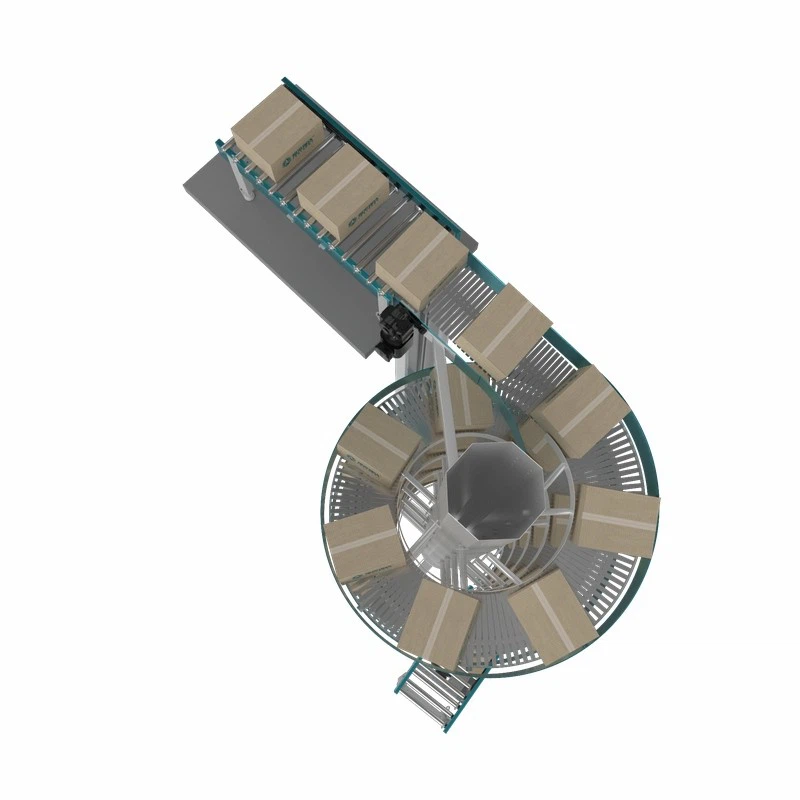
Continuous elevator systems offer great flexibility in design, which is beneficial for traffic management. They can be customized to fit different building layouts and requirements. For instance, they can be installed in circular, spiral, or straight configurations, depending on the available space and the traffic patterns in the building.
In a building with a unique architectural design, such as a circular or irregular - shaped structure, a continuous elevator can be designed to follow the building's shape. This not only enhances the aesthetic appeal of the building but also provides an efficient means of vertical transportation. The flexibility also allows for the integration of continuous elevators with other transportation systems, such as escalators and horizontal moving walkways, creating a seamless multi - modal transportation network within the building.

Reduced Waiting Times
Waiting times are a major concern in traffic management for vertical transportation. In a traditional elevator system, passengers often have to wait for the elevator to arrive at their floor, and then wait again for it to stop at their destination floor. Continuous elevators significantly reduce these waiting times.
Passengers can step onto a continuous elevator at any time without having to wait for it to stop. This is similar to getting on an escalator. The continuous movement eliminates the idle time associated with traditional elevators. In buildings with high traffic volumes, such as hospitals or train stations, reducing waiting times is crucial for providing a comfortable and efficient environment for users.
In a hospital, patients and visitors need to be able to move quickly between different departments. Long waiting times for elevators can be particularly stressful for patients, especially those in need of urgent medical attention. A continuous elevator system can ensure that they reach their destinations in a timely manner, improving the overall patient experience.
Energy Efficiency
Energy efficiency is an important aspect of traffic management in the long run. Continuous elevators are generally more energy - efficient than traditional elevator systems. Since they operate continuously, they do not require the large amounts of energy needed to start and stop frequently, as is the case with traditional elevators.
In addition, continuous elevators can be designed to use regenerative braking systems. When the elevator is moving downwards, the energy generated during the descent can be converted back into electricity and fed back into the building's power grid. This not only reduces the overall energy consumption of the elevator system but also helps to lower the building's operating costs.
Comparison with Other Elevator Types
To better understand the traffic - management benefits of continuous elevators, it's useful to compare them with other common elevator types.
Reciprocating Elevator is the most traditional type of elevator. It moves up and down between floors, stopping at each requested floor. While it is suitable for low - to - medium - traffic buildings, it becomes less efficient in high - traffic scenarios due to the long waiting times and the need for frequent starts and stops.
Screw Elevator is another type of elevator that uses a screw - like mechanism for vertical movement. It is often used for industrial applications or in locations where space is limited. However, it may not be as efficient as continuous elevators in handling large volumes of passengers or goods.
In contrast, continuous elevators offer a combination of high efficiency, large capacity, and reduced waiting times that make them superior for traffic management in many high - traffic environments.
Call to Action
If you are looking for a solution to improve traffic management in your building, whether it's a commercial building, a residential complex, or a public facility, continuous elevators are the way to go. Our company, as a leading Continuous Elevator supplier, offers high - quality continuous elevator systems that are tailored to your specific needs.
We have a team of experts who can work with you to design the most suitable continuous elevator system for your building, taking into account factors such as traffic patterns, building layout, and capacity requirements. Contact us today to discuss your project and explore how our continuous elevators can transform the vertical transportation in your building.
References
- Building Elevator and Escalator Handbook, Second Edition, by Alexander G. Bell
- Vertical Transportation Handbook, Fourth Edition, by Cliff J. Long and Peter M. Turk